
Review · NEW YORK CITY
Private Broadway Studio Tour in New York City
Broadway magic begins long before the curtain rises. At Open Jar Studios, you get a rare look at the rooms where shows are written, tested, cast, and rehearsed, guided by someone who works in the theater world. The tour connects the finished musical you see onstage with the many drafts, auditions, models, and hard decisions behind it.
I like the chance to see real theatrical artifacts, including set models and original audition materials. I also like the private format, which gives your group room to ask questions and follow the parts of the process that interest you most. The main drawback is the short running time, about 45 minutes, so this is a focused introduction rather than a long studio visit. An active rehearsal room is possible, but not guaranteed.
Key points to know

- Open Jar Studios is a working Broadway rehearsal address, not a theater tour built around a public stage.
- A theater professional leads the visit, with stories about writing, casting, development, and production.
- Rare objects add substance, including set models and original audition materials.
- You may see an actual rehearsal room, though access depends on what is happening that day.
- The private format suits questions, families, and theater fans who want to set the pace.
- The visit lasts about 45 minutes, begins at 1601 Broadway, and returns to the same meeting point.
What Broadway looks like before opening night
Most Broadway tours focus on the final product: the theater, the orchestra seats, the marquee, and perhaps a peek backstage. This experience takes a different route. It looks at the working process before a show reaches its theater.
That makes Open Jar Studios a useful stop for anyone who has wondered how an idea becomes a musical. You hear about writing and development, then move into the practical work of producing and casting. The focus is not simply on famous titles. It is on the decisions that shape a production before an audience ever sees it.
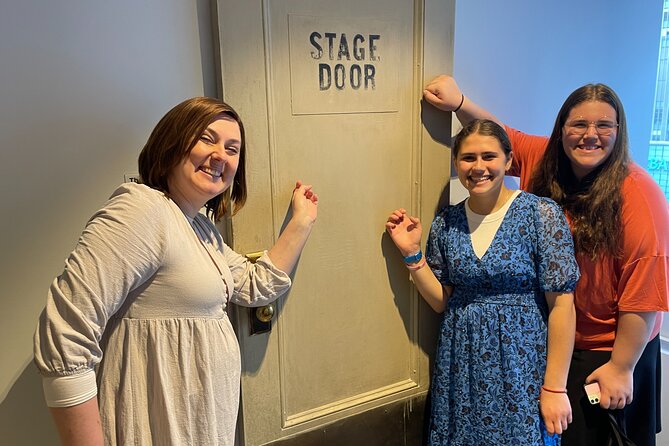
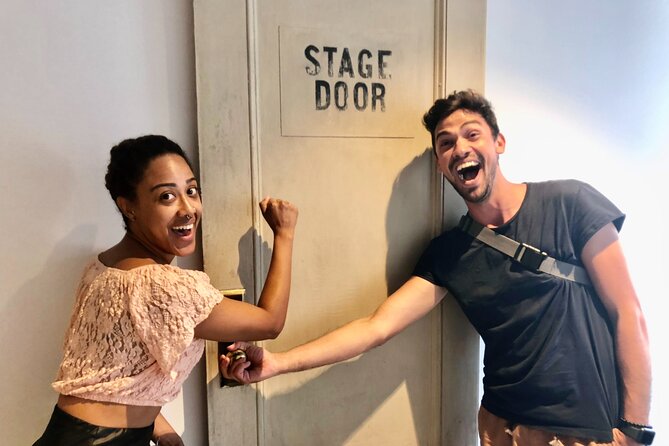
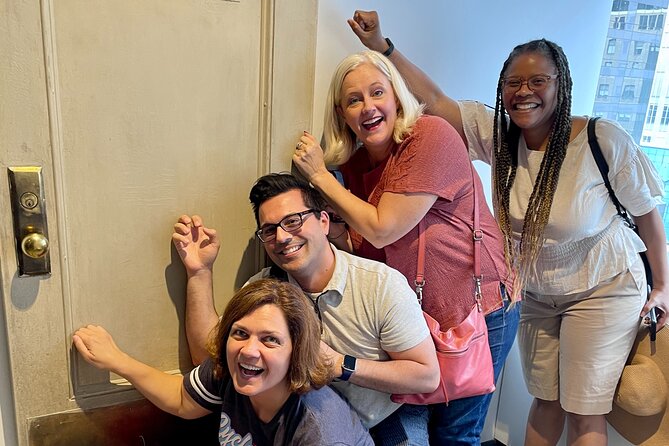
The setting matters. You are visiting a rehearsal studio where Broadway shows have been worked on, rather than hearing about the process in a general lecture hall. You might not see a complete show in progress, but the building itself helps explain the working side of theater.
The experience is private, so your group can ask questions as they occur. That is a real advantage in a subject with many layers. If you are curious about auditions, set design, or how a musical changes during development, you have a better chance of spending time on those subjects instead of following a fixed speech meant for a large crowd.
More Film Studio Tours in the USA
- NYC: Broadway Secrets & Behind-the-Scenes Studio Tour
★ 4.6 · 86 reviews - Los Angeles: Warner Bros. Studio Tour Hollywood
★ 4.6 · 7,191 reviews - Warner Bros. Studio Tour Hollywood
★ 4.5 · 5,246 reviews
Starting at 1601 Broadway
The meeting point is 1601 Broadway, New York, NY 10010. The tour begins and ends there, which keeps the logistics simple. The location is near public transportation, so you do not need to build a complicated transfer into your day.
I would arrive with enough time to identify the meeting point and settle in. The visit is short, and losing even ten minutes can make a noticeable difference. Since the activity uses a mobile ticket, keep your confirmation easy to reach on your phone.
This is a studio visit, not a broad walking tour of the Theater District. You should not expect a long route through several Broadway theaters or a stop at a particular show venue. The value is concentrated inside Open Jar Studios and in the explanation of how productions are built.
The activity is private for your group. That does not mean you receive unlimited access to every room. Studios are working spaces, and the possibility of seeing an active rehearsal room depends on what is taking place. Still, the private structure gives the visit a more personal feel than a standard group presentation.
The first 30 minutes: how a musical takes shape
The central portion of the experience lasts about 30 minutes, within the approximately 45-minute total visit. A member of the theatrical industry explains how Broadway productions develop, using the studio setting as a practical backdrop.
You learn about writing and development first. A musical does not arrive fully formed. Ideas are tested, rewritten, and adjusted as the creative team discovers what works onstage. The tour gives you a window into that process and into the way a show changes on its road toward Broadway.
The discussion then reaches producing and casting. These subjects are valuable because audiences often see only the performers and the final design. The work of choosing a cast, assembling a production, and turning creative plans into something workable is less visible. Here, you get a direct explanation of those steps.
The guide also shares insider stories about shows during development. The supplied information does not promise a particular production or a fixed list of anecdotes, so the exact examples can vary. That is part of the appeal, but it also means you should come ready for a broad look at Broadway rather than a single-show history.
Hugh is one guide associated with the experience. He is described as entertaining and engaging with young theater fans, while also sharing plenty of anecdotes. If you are bringing children or teenagers who already love musicals, that matters. A good guide can turn production terms into stories that hold their attention.
Set models and original audition materials
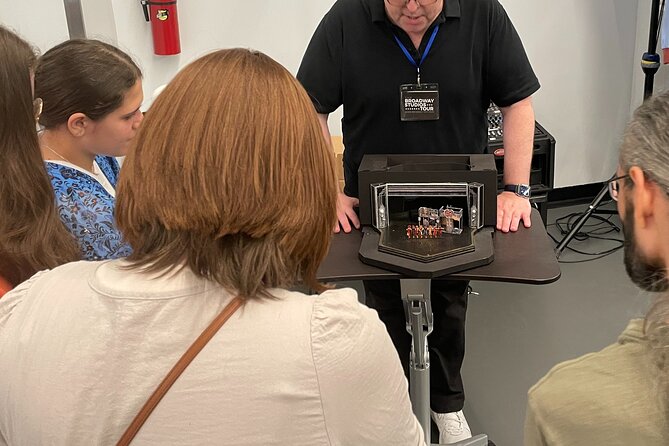
The artifacts give the explanation something concrete to work with. Set models show how a production’s visual plan can be shaped before full scenery is built. Even if you have seen many Broadway shows, it is useful to consider the difference between a small model and the finished stage picture.
Original audition materials offer another view of the process. They point to the moment when performers are being considered, before casting decisions are final. You do not just hear that auditions happen. You see material connected to that stage of the work.
These objects are especially helpful if you prefer evidence to general theater talk. They make the process easier to picture and give the guide specific material to discuss. They also add a sense of rarity, since this is not the sort of material most ticket buyers encounter during an ordinary night at a musical.
The studio’s artifacts should not be confused with a full museum collection. This is a short guided experience, not a large exhibition with hours of independent viewing. The benefit is the explanation that gives each item context. Without that context, a set model is simply a small object. With it, you can see how design choices fit into the larger production.
More Film Studio Tours in New York City:
- From London: Harry Potter Warner Bros Studio Tour
★ 4.7 · 26,588 reviews - Harry Potter: Warner Bros. Studio Tour from King’s Cross
★ 4.7 · 6,442 reviews - London: Warner Bros. Studio Tour with Return Transportation
★ 4.7 · 5,752 reviews - London: Harry Potter Studio Tour and Oxford Day Trip
★ 4.7 · 5,098 reviews
The possible rehearsal-room peek
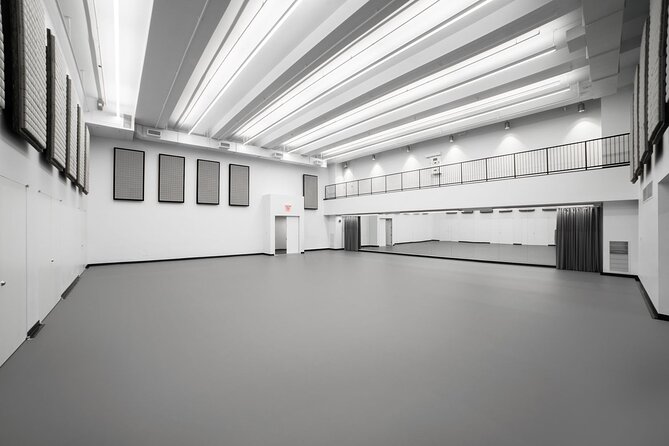
The most exciting part for many theater fans will be the chance to look inside an actual rehearsal room. The wording is important: this is a possibility, not a promise. Working schedules and privacy needs can affect what rooms are available.
If access is possible, it gives you a direct connection to the place where performers and creative teams prepare a show. You may not see a rehearsal in progress, and you should not book this expecting a performance or a guaranteed celebrity sighting. The value is seeing the kind of room in which Broadway work happens.
That uncertainty is the main practical limitation of the experience. If your entire reason for booking is to enter one specific rehearsal room, you may be disappointed if access is not possible. If you view it as an added chance within a broader studio tour, the format makes more sense.
The tour still has value when no rehearsal room is available. The explanation of writing, casting, production, and design remains the main event. The room peek is a bonus that can make a short visit feel especially memorable.
Why the private format matters
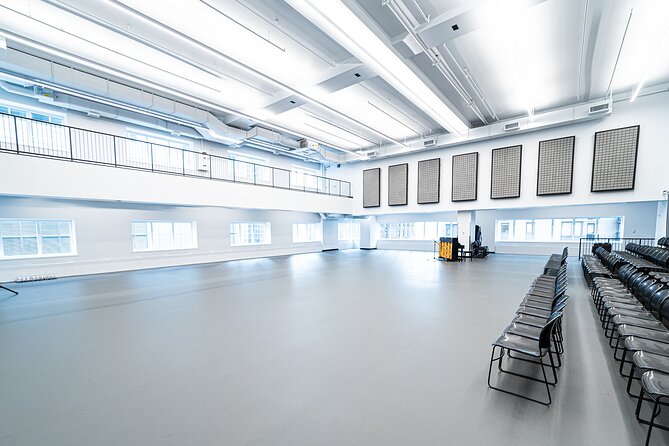
A private tour changes the pace. You are not trying to catch a guide’s words from the back of a large group, and you can ask questions without waiting for a long line of people ahead of you.
That works well for mixed groups. One person may care about casting, another about set design, and a young theater fan may want to know how performers get chosen. The guide can respond to those interests instead of treating everyone as if they arrived with the same level of theater knowledge.
The phrase go at your own pace should be read in context. This is still a short, guided activity with a planned structure. You are not wandering through the studio independently for several hours. The flexibility comes from the private setting and the opportunity to spend more time on questions that matter to your group.
The format also suits visitors who enjoy a quieter, more focused experience. You are not being asked to race from one Broadway landmark to another. You are spending a short period with one subject and one location.
Is $26 a fair price?
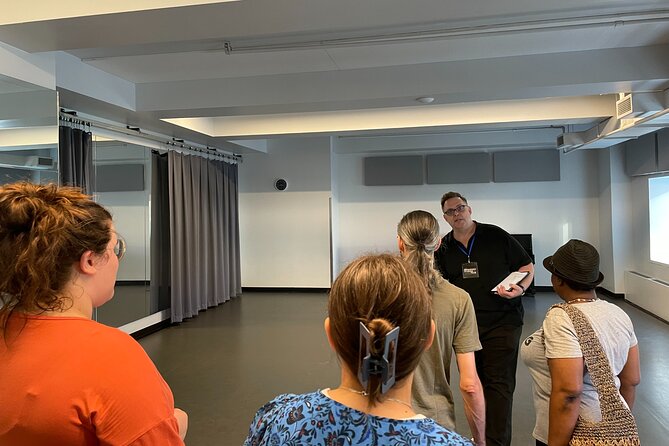
At $26 per person, the tour sits in an accessible price range for a New York activity. The value depends on what you want from a Broadway experience.
If you are already paying for a show, this is a useful companion activity. A performance shows you the finished work. Open Jar Studios explains the work that happens before the performance exists. Taken together, the two experiences give you a fuller picture of Broadway.
The price also makes sense for families with strong theater interest. Children and teenagers who enjoy musicals often ask how actors get cast, how scenery is planned, or how a show changes during rehearsal. This visit gives those questions a place to start, without requiring the cost of another theater ticket.
Still, you should keep the length in mind. At roughly 45 minutes, this is not a full-day attraction. If you measure value by hours of entertainment alone, it may feel brief. I would book it for the access and subject matter, not because it fills a large section of your day.
The 100 percent recommendation rate and five-star rating shown for the experience suggest strong satisfaction among the small set of published ratings, including praise for the guide’s anecdotes and his connection with young theater fans. The sample is limited, so I would treat those ratings as encouraging rather than as a promise that every visit will be identical.
Who will get the most from this visit?
This tour is a strong match for:
- Families with children or teenagers who love theater
- Broadway fans who want to understand the creative process
- Visitors pairing a studio visit with an evening musical
- People who prefer a private activity over a large group tour
- Anyone curious about casting, writing, producing, or stage design
You do not need to be a theater professional to follow the experience. The subject is broad, and the guide explains the stages of production through stories and examples.
You may want to skip it if your main goal is a long backstage tour of a specific Broadway theater. This experience is centered on a rehearsal studio, not on one theater’s auditorium, dressing rooms, or stage machinery. You should also think twice if you need a guaranteed rehearsal in progress. That access is only possible when conditions allow.
Most people can participate, and service animals are allowed. The provided information does not give detailed mobility notes for every studio area, so contact the provider if you need a precise answer about a particular access need.
Planning the visit around your New York day
The tour is short enough to fit into a busy itinerary, but you should not treat it as a casual drop-in. Your confirmation is provided at booking, and the activity uses a mobile ticket. Keep the phone carrying the ticket charged and ready.
Because the tour begins and ends at the same address, it is easy to pair with other plans nearby. You can also schedule it before or after a Broadway performance, but leave a sensible buffer. Theater schedules and New York transportation can be unpredictable, and the tour itself has a fixed meeting point.
The experience is booked an average of 27 days ahead, which tells me that planning early is wise, especially if you need a particular date. That does not guarantee every date will sell out, but it is a useful signal for visitors building a theater-centered trip.
Free cancellation is available up to 24 hours before the start time for a full refund. Changes or cancellations inside that window are not accepted for a refund. The activity also requires a minimum number of participants, and if that minimum is not reached, you are offered another date or experience, or a full refund.
My recommendation for theater fans
I would book the Private Broadway Studio Tour if you want to understand how a musical is made, not just watch the final performance. The private setting, industry guide, original audition materials, set models, and possible rehearsal-room access give the 45-minute visit a clear purpose.
The short duration and uncertain room access are the points to weigh carefully. This is not a replacement for a Broadway show, and it is not a guaranteed rehearsal observation. But at $26, it offers a practical way to see the working side of theater, especially for families and dedicated musical fans.
If Hugh is leading your visit, expect an engaging guide who can keep young theater fans involved with anecdotes and direct explanations. Book it as a focused behind-the-scenes introduction, arrive ready with questions, and pair it with a performance if you want the full before-and-after view of Broadway.
FAQ
Where does the Private Broadway Studio Tour begin?
The tour begins at Open Jar Studios, located at 1601 Broadway, New York, NY 10010.
Where does the tour end?
The activity ends back at the meeting point at 1601 Broadway.
How long does the experience last?
The total duration is approximately 45 minutes. The main studio experience is described as lasting about 30 minutes.
Is the tour private?
Yes. Only your group participates in the private activity.
What can I see during the tour?
You can learn about writing, developing, producing, and casting Broadway shows. The visit also includes rare theatrical artifacts such as set models and original audition materials.
Will I definitely enter an active rehearsal room?
No. The tour offers the possibility of peeking inside an actual rehearsal room, but access is not guaranteed.
Can I cancel for a full refund?
Yes. You can cancel at least 24 hours before the experience start time for a full refund. Cancellations or changes made less than 24 hours before the start time are not refunded or accepted.
Just added in New York City
- Elf and Home Alone 2 Movie Locations Tour in Central Park★ 5.0 · 54 reviews
- Self Guided “Central Park Movie Tour” Solo Walking Tour in New York City★ 4.5 · 2 reviews
- New York City Holiday Movie Sites and Lights Bus Tour★ 4.0 · 71 reviews
- SUCCESSION Walking Tour – Uptown & Downtown NYC Filming Locations★ 5.0 · 21 reviews
- 2 Hour Private Central Park TV and Movie Guided Walking Tour★ 4.5 · 40 reviews
- SUCCESSION Walking Tour of Downtown Manhattan Filming Locations★ 5.0 · 3 reviews
- Harry Potter and the Cursed Child on Broadway Ticket★ 4.0 · 53 reviews
- NYC Movie & TV Location Running Tour – Jog Iconic Filming Spots★ 5.0 · 2 reviews
Film Studio Tours in the USA, compared.


Universal Studios Hollywood General Admission Ticket, California
Read our review →
Skip the Line: Express Ticket at Universal Studios Hollywood
Read our review →
The VIP Experience at Universal Studios Hollywood in California
Read our review →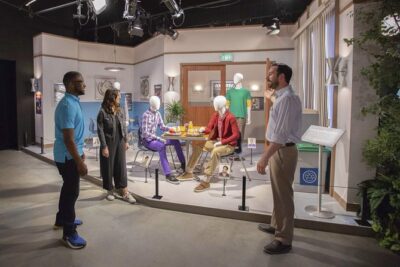
Warner Bros. Studio Tour & Celebrity Homes Tour Package
Read our review →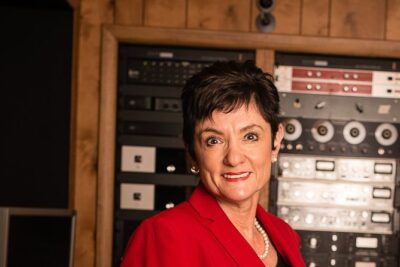
Muscle Shoals Sound Studio Tour in Sheffield Alabama
Read our review →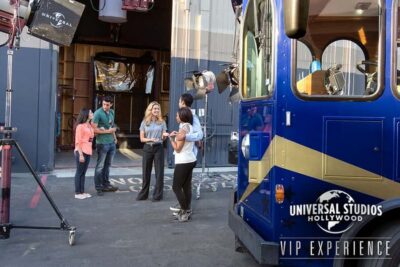
Universal Studios Hollywood: VIP Tour with Ticket
Read our review →
Warner Bros Studio Hollywood & Bus Tour Package
Read our review →This one also appears on