
Review · USA
Myrtle Beach History, Movies and Music Trolley Tour
Myrtle Beach’s story goes well beyond beaches and boardwalks. This two-hour trolley tour traces the city’s movie sets, early music scene, lost landmarks, and the important story of Charlie’s Place, a Black nightclub and motel tied to The Green Book.
I like the local storytelling and the easy way the trolley connects far-flung sites. I also like the stop at Charlie’s Place, where the past feels more concrete than it does at many of the vanished movie and music locations. The main drawback is that the tour packs in a lot of information, and some original buildings are gone.
Key points to know before booking
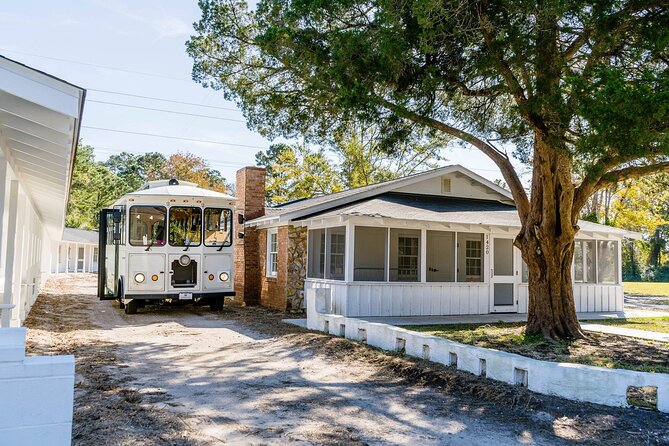
- Charlie’s Place is the emotional center: See Charlie’s home and a reconstruction of his Fitzgerald Motel, a stop connected to The Green Book.
- Kathryn leads the story: The guide is a lifelong Myrtle Beach resident who brings personal perspective, research, trivia, and local anecdotes.
- Movies get plenty of attention: Expect stories about early Myrtle Beach films, actors, locations, and the movie Shag.
- You cover more ground by trolley: The ride links the historic district, beach areas, music sites, sculptures, and other points around town.
- The tour is information-heavy: It suits people who enjoy history and storytelling, but you may need to focus to keep up.
- Plan around the weather: The tour requires good weather and can be canceled if too few people book.
Why Myrtle Beach’s past is more interesting than its postcard image
Myrtle Beach is often sold as a place for sand, golf, rides, and nightlife. This tour gives you a different frame. From a cushioned trolley seat, you hear how the city developed as a place for musicians, filmmakers, vacationers, and Black performers traveling during segregation.
The story reaches from the 1920s through the 1970s, with special attention to the years when Myrtle Beach’s entertainment scene took shape. You hear about musicians who played in town, actors connected to local productions, beach cabanas, the old train station, and buildings that have changed use or disappeared.
That wider view is the tour’s real value. You are not simply checking off famous buildings. You are learning how a resort town grows, forgets, rebuilds, and tries to protect the pieces of its past.
The experience is led by Kathryn, who is described as a lifelong Myrtle Beach resident and the person who created the tour. Her approach is part lecture, part local conversation. She uses stories, trivia, personal observations, and carefully researched details to keep the ride moving.
If you enjoy a guide who can answer questions and add context, this is a good fit. If you prefer quiet sightseeing with only occasional commentary, the steady stream of information may feel like a lot.
More History Behind the Scenes in the USA:
- History and Movie Tour of Beaufort by Golf Cart
★ 5.0 · 562 reviews - Complete History and Movie Walking Tour of Beaufort
★ 5.0 · 30 reviews - Central Park Pedicab Tours – History and Movie Locations
★ 5.0 · 13 reviews
A comfortable way to see scattered Myrtle Beach sites
The tour begins at 10 a.m. at 4002 Deville Street in Myrtle Beach and returns to the same meeting point. The trolley is climate-controlled, which matters in a place where heat, humidity, or rain can make an outdoor history walk tiring.
A driving tour also makes practical sense here. Movie locations, historic areas, music sites, sculptures, and beach landmarks are not all gathered in one compact quarter. Walking between them would take much longer and would leave you with less time for the stories.
The vehicle holds a maximum of 33 people. That is not an intimate private tour, but it is small enough for a guide’s voice and questions to remain part of the experience. The ride uses a traditional trolley style with wood paneling, according to the tour details shared by the operator.
The vehicle returned on time for one group, and the driver paid attention to comfort during the ride. A passenger using a cane was able to sit near the front with her husband. The tour is described as suitable for most people, and service animals are allowed, but it is still sensible to mention any mobility needs when booking.
Bring your phone or camera. You will have chances to photograph the historic district, Charlie’s Place, the reconstructed motel, public sculptures, and other points along the route. The trolley keeps you moving, so do not expect long stops at every location.
The new historic district: a city still being rebuilt
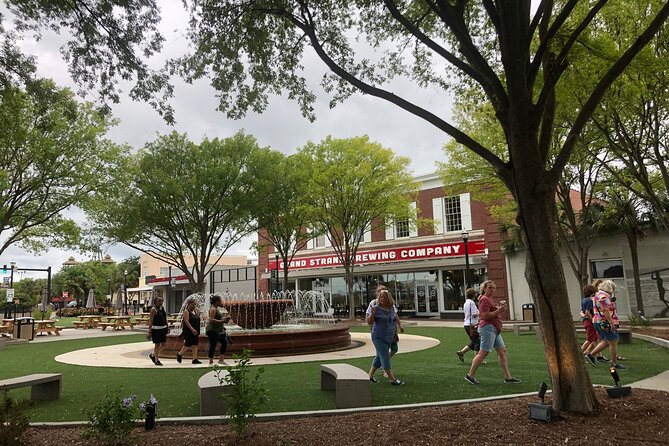
The first planned stop is a brief visit in Myrtle Beach’s new historic district. You have about 10 minutes here, with no admission charge.
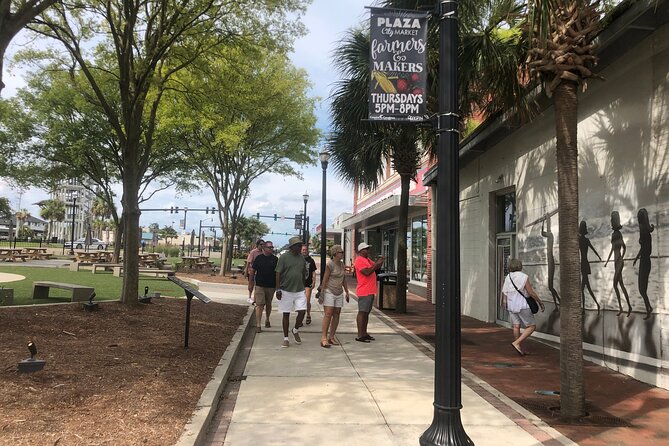
This is not a polished old-town quarter where every storefront looks frozen in time. Some historic buildings now house current businesses, and new businesses are opening in restored or older structures. That makes the stop useful, but it also creates a clear limitation: you are often seeing a district in transition rather than a complete historic setting.
The guide connects what you see today with Myrtle Beach’s earlier development. Stories include the old train station, historic preservation plans, and the way the city is trying to give its past a stronger place in the modern resort.
I like this part because it shows history as a living civic project. You are not just looking backward. You are seeing decisions about what to preserve, what to rebuild, and how to use old buildings without turning the area into a museum.
The short stop also keeps the tour from becoming a walking-heavy outing. You step out, look around, take pictures, and return to the trolley for more commentary. If you want extended time inside buildings or detailed architectural study, this section may feel too quick.
Charlie’s Place and the Fitzgerald Motel
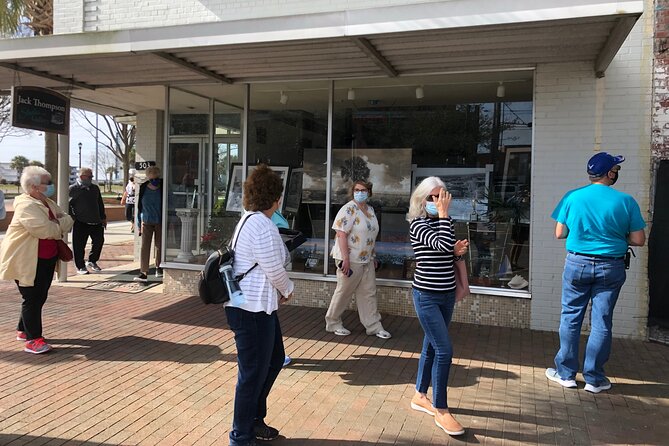
The most distinctive stop is Charlie’s Place Historic Site. You spend about 15 minutes here, and admission is included.
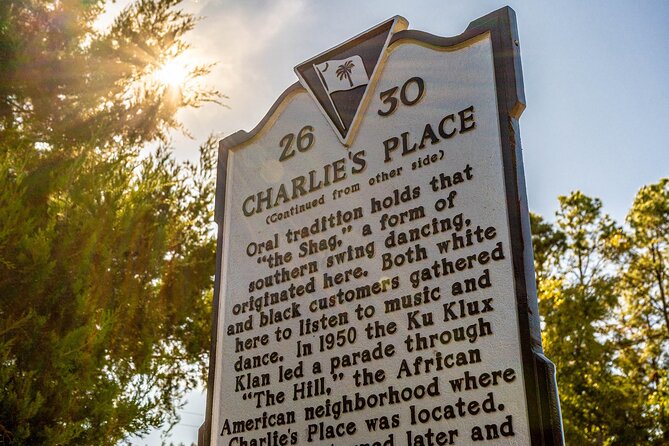
The original Charlie’s Place nightclub is gone, but the site tells an important story. From the 1930s through the 1960s, the club hosted major names in American music. It was part of the Chitlin’ Circuit, the network of venues that gave Black performers places to work during segregation, when many hotels, restaurants, and clubs were closed to them.
The stop includes Charlie’s home and a reconstruction of his Fitzgerald Motel. The motel appeared in The Green Book, the guide that helped African-American motorists find safe places to eat, sleep, and receive services while traveling under segregation.
This is where the tour moves beyond entertainment trivia. The names of famous musicians matter, but the larger point is the network that made their careers possible and the obstacles they faced on the road. Charlie’s Place links Myrtle Beach to that wider American story.
The reconstructed motel is arranged to suggest its period of operation. That gives you something physical to examine, rather than asking you to picture everything from a vacant lot or a passing view from the trolley. It also helps explain why a motel listing in The Green Book was not a minor detail. For Black families on the road, reliable and safe lodging could determine where they could travel.
The site is compact, so do not expect a long museum visit. Its strength is the guide’s explanation and the meaning of the place. Kathryn’s stories about performers such as Billie Holiday, Little Richard, and Marvin Gaye give the stop a human scale.
For many people, this will be the most memorable part of the outing. It is also the stop I would prioritize if you are choosing this tour mainly for African-American history, music history, or The Green Book connection.
More Film Location Tours in the USA:
- Los Angeles: Warner Bros. Studio Tour Hollywood
★ 4.6 · 7,191 reviews - Full-Day Iconic Sights of LA, Hollywood, Beverly Hills, Beaches and More
★ 5.0 · 6,147 reviews - Warner Bros. Studio Tour Hollywood
★ 4.5 · 5,246 reviews - Hollywood, Beverly Hills & Celebrity Homes Tour by Open Air Bus
★ 5.0 · 2,557 reviews
From movie sets to missing buildings
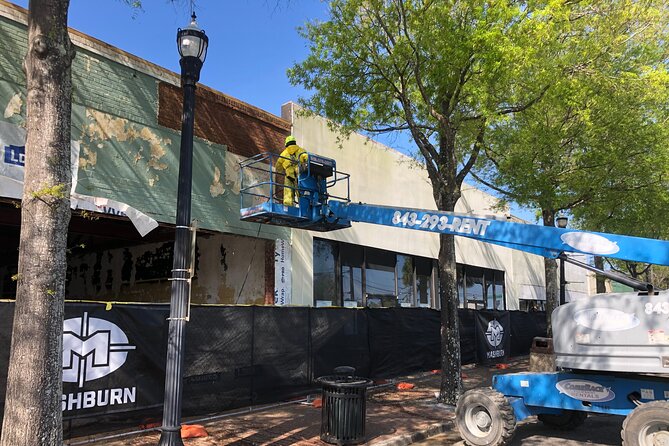
The movie side of the tour is a major part of the experience. You hear about films made in and around Myrtle Beach, actors connected with the area, and locations from Shag. You may see houses and other settings associated with the film while riding through the city.
The tour also covers early movie history, with stories reaching back to the 1920s and continuing into the 1970s. That gives you a sense of Myrtle Beach before its modern identity settled into place.
The practical catch is that film locations change. Businesses move in, buildings are renovated, and original structures can disappear. At some points, you may be looking at a current business and listening to an explanation of what stood there before.
I see that as both a weakness and a useful lesson. A location tour is most satisfying when the original building remains. Still, the absence of those buildings tells you something about how quickly a resort town changes. The guide helps fill in the gaps with photographs, stories, and context, but you should not expect a preserved movie backlot.
If you are a serious film fan, keep your expectations measured. This is not a production tour with access to interiors, costumes, or working studios. It is a moving history lesson about Myrtle Beach’s connection to movies and the people who made them.
Music, cabanas, sculptures, and the city between the headlines
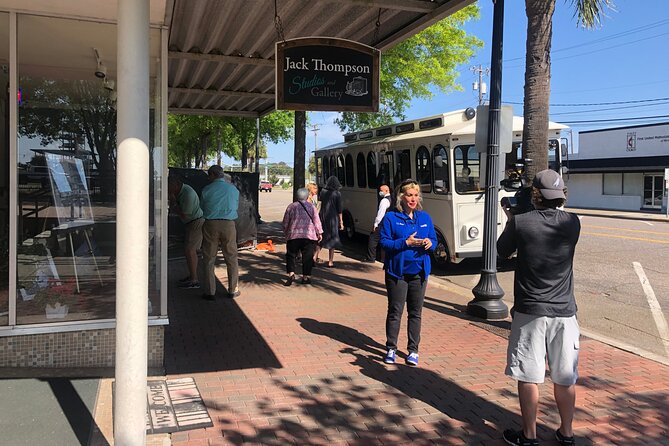
The music stories are not limited to Charlie’s Place. The route includes accounts of musicians who performed in Myrtle Beach and the beach cabanas that formed part of the city’s earlier entertainment culture.
That material gives the tour a broader rhythm. You move from major names to everyday places, from famous performances to the modest structures that helped define a beach town. The music history is tied to the city’s buildings and streets, not treated as a separate subject.
You also see sculptures and other public features around town. These details may seem small, but they help break up the longer stretches of narration. The trolley lets you absorb the city as it is now while hearing what used to occupy the same spaces.
There is no indication that live music is included, so book this for stories about music, not a concert. One passenger specifically wished music had been part of the ride. That is a fair limitation to keep in mind. You will hear about performers and venues, but you should not expect recorded songs or live musicians to carry the tour.
Kathryn’s storytelling style and the pace of the ride

Kathryn is the part of the tour most likely to shape your experience. Her delivery is described as enthusiastic, funny, and full of local detail. She asks trivia questions, answers questions from the trolley, and adds personal stories from her connection to Myrtle Beach.
That personal angle helps the commentary feel grounded. You are not getting only dates and names. You are hearing how a longtime resident understands the city’s changes and why certain places still matter.
The pace is generally steady, but the amount of information is high. You may hear about movies, performers, historic buildings, preservation plans, architecture, and future changes within the same two hours.
I suggest choosing one or two themes before you board. You might focus on Black travel history, local movie locations, or the music scene. That simple choice can help you remember more after the trolley returns to Deville Street.
Some departures may be affected by demand. The experience requires a minimum number of people, so it can be canceled if too few book. Poor weather can also lead to a cancellation. If that happens, you are offered another date or experience, or a full refund.
Is $45 a fair price?
At $45 per person, the tour is priced above a basic sightseeing trolley ride, but it offers more than a quick loop around the beach. You get roughly two hours of guided commentary, a climate-controlled vehicle, a stop in the historic district, and the Charlie’s Place site.
The value depends on how much you want interpretation. If you only want to see Myrtle Beach from a trolley, a cheaper ride might satisfy you. If you want someone to explain why a building, motel, club, or movie location matters, the price is easier to justify.
The tour also saves you the trouble of researching scattered sites yourself. You would need to piece together movie locations, music history, The Green Book connection, and the city’s preservation work on your own without the ride.
A past departure included a copy of Kathryn’s book about Myrtle Beach’s movie industry, but that book was described as out of print and available only to the last group that received it. Do not book expecting a book to be included.
The strongest value comes from the guide and the subject matter, not from the number of attractions packed into the route. If you enjoy local history, $45 buys a useful introduction. If you need dramatic scenery, frequent long stops, or entertainment built around music, the value will be less clear.
Who should take this Myrtle Beach trolley tour?
I would recommend it to you if you enjoy:
- Local history that includes ordinary buildings and lost places
- Movie locations and stories from productions connected to Myrtle Beach
- American music history, especially the Chitlin’ Circuit
- The Green Book and Black travel history
- A guide-led experience with plenty of spoken detail
- Seeing more of town without walking long distances
- A relaxed morning activity for couples, families, or visiting friends
It is also a useful choice for locals who want an activity with out-of-town company. The route offers enough background to interest someone new to Myrtle Beach, while the preservation and development stories may give longtime residents a fresh look at familiar streets.
I would hesitate if you want a short, quiet ride with little narration. I would also think twice if your main goal is to enter historic buildings or see original movie structures. Some sites are gone, some are viewed from outside, and the tour’s power often rests in the story rather than the physical remains.
Book at least 24 hours ahead if your plans might change. You can cancel up to that point for a full refund. Changes or cancellations inside the 24-hour window are not accepted for a refund.
Should you book it?
Book this tour if you want to understand Myrtle Beach beyond its beach attractions. The Charlie’s Place stop, the Fitzgerald Motel, and the connection to The Green Book give the outing a purpose that many resort-town sightseeing rides lack.
You should also book it if Kathryn’s local approach appeals to you. Her enthusiasm, humor, and large store of facts are central to the experience. Just be ready for a lot of information, a few places where you must imagine the vanished past, and no live music on the trolley.
For $45, this is a strong pick for history-minded visitors, movie fans, music fans, and anyone taking a first serious look at Myrtle Beach’s past.
FAQ
How long is the Myrtle Beach History, Movies and Music Trolley Tour?
The tour lasts approximately two hours and returns to the starting point at the end.
Where does the tour begin?
The tour begins at 4002 Deville Street, Myrtle Beach, South Carolina 29577. The listed start time is 10 a.m.
What places does the tour visit?
The tour includes a brief stop in Myrtle Beach’s new historic district and a stop at Charlie’s Place Historic Site. The commentary also covers movie locations, music history, historic buildings, sculptures, beach cabanas, and the city’s development.
Is Charlie’s Place still standing?
The original Charlie’s Place nightclub is no longer there. The site includes Charlie’s home and a reconstruction of the Fitzgerald Motel, which was listed in The Green Book.
Is the tour accessible to most people?
Most people can participate, and service animals are allowed. The trolley is climate-controlled. The tour information does not provide detailed vehicle accessibility specifications, so contact the operator if you need a particular accommodation.
Can I cancel for a refund?
Yes. You can cancel at least 24 hours before the start time for a full refund. Cancellations or changes made less than 24 hours before the start time are not accepted, and poor weather or an insufficient number of bookings can also cause the tour to be canceled.
Just added in the USA
- Zion: Harry Potter-Inspired Zion Ghost Tour with Sunset View★ 5.0 · 8 reviews
- Universal Studios Hollywood: Halloween Horror Nights★ 4.2 · 98 reviews
- Harry Potter’s Zion Ghost Tour★ 5.0 · 7 reviews
- Forks Town, Twilight Movie, Olympic Small Group 1 Day Tour★ 5.0 · 3 reviews
- Totally Made-Up Hallmark Christmas Movie★ 5.0 · 5 reviews
- Behind The Scenes Movie Tour Midnight in the Garden★ 4.0 · 5 reviews
- Half-Day Hollywood In The South Film Locations in Savannah★ 5.0 · 2 reviews
- 2- Hour Pottery Workshop and Studio Tour in Ojai★ 5.0 · 51 reviews
Historical Tours, compared.


History and Movie Tour of Beaufort by Golf Cart
Read our review →


Top-Rated Split Game of Thrones and History City Walk – Dracarys!
Read our review →

This one also appears on