
Review · ICELAND
Volcano Exhibition and Cinema – Lava Centre Iceland
Iceland’s volcanic story gets a lively, hands-on treatment at Lava Centre. You’ll see how magma, earthquakes, ice, and water shaped the country, then watch eruption footage before heading outside for views of major volcanoes. The most memorable parts are the earthquake simulator and the cinema films showing recent activity around Grindavík and the Blue Lagoon.
I like that the exhibits explain big geological ideas without requiring a science degree. I also like the chance to connect the displays with real volcanoes outside, including Eyjafjallajökull, Katla, Hekla, and the Westman Islands. The main limitation is time: at $42 per person, it is not a quick roadside stop, especially if you only spend the roughly one hour some visitors allow.
Key points to know before you go
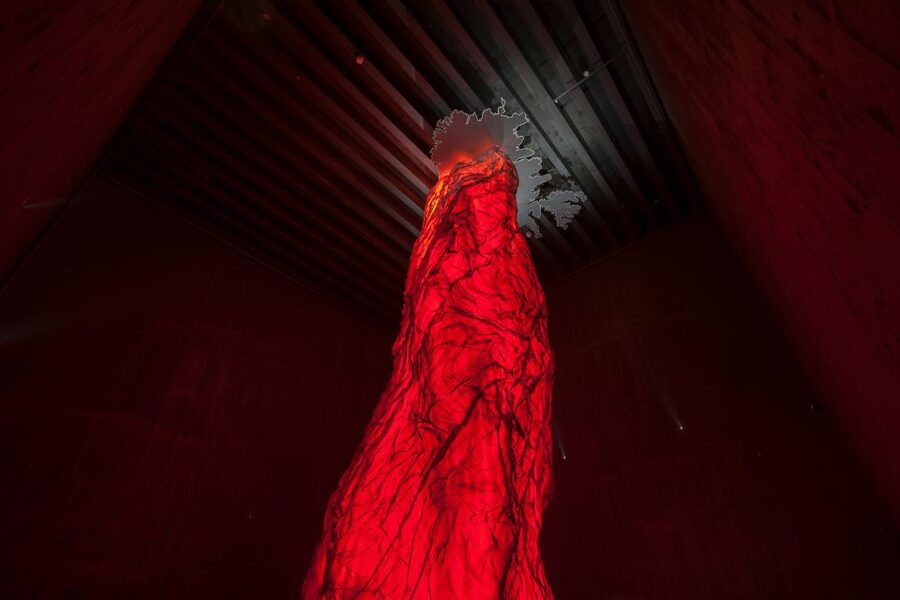
- Feel an earthquake in the Trembling Earth section: A simulator gives the subject a physical jolt instead of leaving it as a map or diagram.
- Watch recent Icelandic eruptions in the cinema: The footage covers activity around Grindavík and the Blue Lagoon.
- See four major volcanoes from the deck: Eyjafjallajökull, Katla, Hekla, and the volcanic islands are part of the outdoor view when conditions cooperate.
- Learn why Iceland has black sand and geysers: The displays connect volcanic processes with familiar sights across the country.
- Use the visit as a weather-proof stop: The main exhibition, cinema, and many interactive stations are indoors, with the viewing deck adding an outdoor finish.
Iceland’s fiery story starts indoors
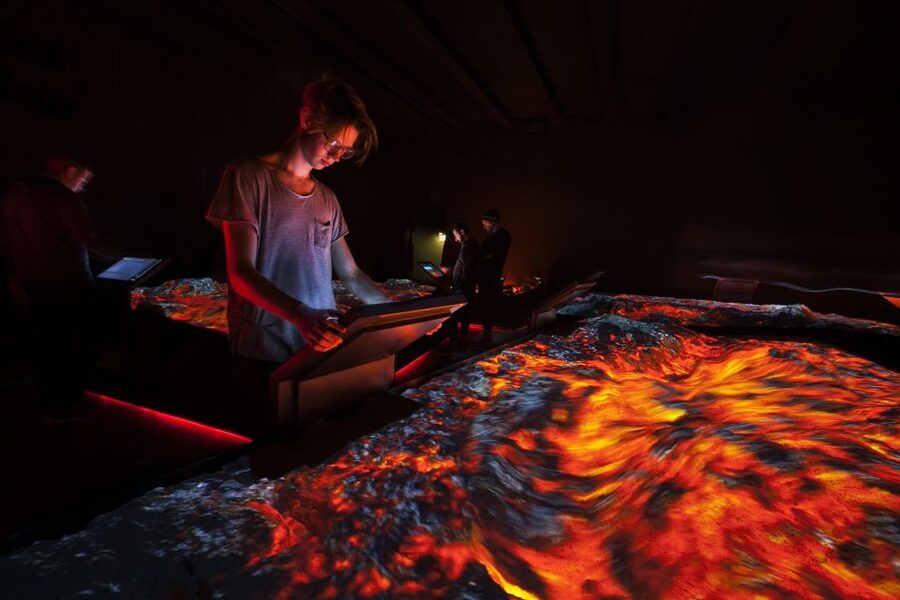
Lava Centre sits in southern Iceland, in a region shaped by some of the country’s best-known volcanoes. Its setting matters. This is not a generic science museum placed anywhere in the world. The displays point you toward the actual volcanic systems around you.
The experience follows Iceland’s geological development rather than presenting a random collection of facts. You move through sections about earthquakes, magma, lava, volcanic structures, and eruptions. The approach is visual and interactive, with videos and artistic displays helping explain forces that are often hard to picture.
I like this format for a first visit to Iceland. You may already know that the country has volcanoes, black beaches, geysers, and hot springs. Here, those sights get connected. Black sand is not just a striking beach color. It comes from volcanic material. Geysers and colorful mountains also make more sense once you understand the heat and pressure below the ground.
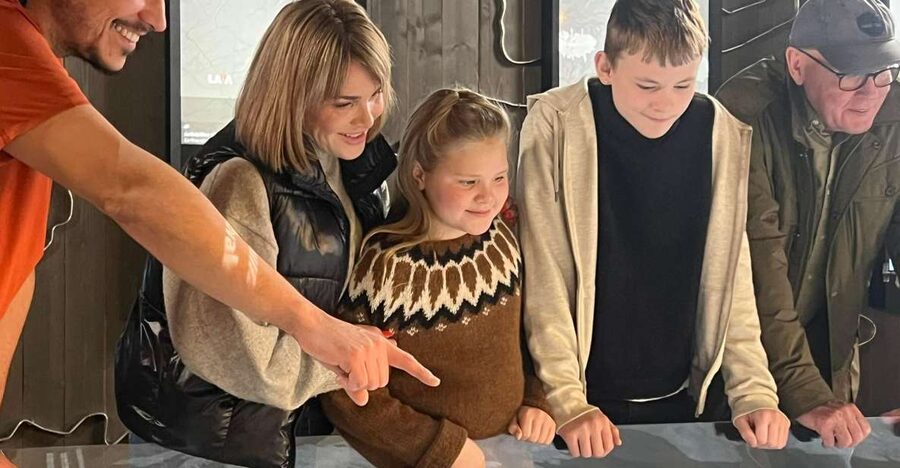
The exhibition is especially useful if you are traveling with children or with someone who prefers seeing and touching an idea instead of reading long technical panels. It also works for adults who want a clearer explanation of Iceland’s geology before visiting places such as Reynisfjara, the Golden Circle, or the Reykjanes Peninsula.
More Film Museums and Exhibitions in the world:
- Split: Game of Thrones Museum Entrance Ticket
★ 3.8 · 385 reviews - Minoans World 3D Museum & 9D Cinema
★ 4.5 · 315 reviews - Star Wars story Museum Ticket Pass
★ 5.0 · 249 reviews
The Trembling Earth makes plate movement easier to grasp
The Trembling Earth section explains why earthquakes happen in Iceland. The country sits across a diverging tectonic boundary, where plates pull apart and magma rises through the opening. That sentence can sound abstract in a book. The displays give it a more direct shape.
You can see live earthquakes on a map and experience a simulated earthquake. The simulator is a small but important part of the visit because it turns a geological process into something physical. It helps you understand why buildings, roads, and communities in Iceland must account for movement beneath the ground.
I would make this one of your first stops. The earthquake section gives context to the rest of the exhibition, particularly the displays about magma and volcanic eruptions. It also gives younger visitors a clear reason to pay attention. The simulator adds a bit of theater, but it is tied to a real subject rather than being a ride with no lesson attached.
The experience is not designed to recreate a specific damaging earthquake, and you should not expect a full-scale disaster simulation. Its value is simpler. You feel the ground move, then connect that sensation with the maps and explanations around it.
The Fiery Heart explains Iceland’s hot spot
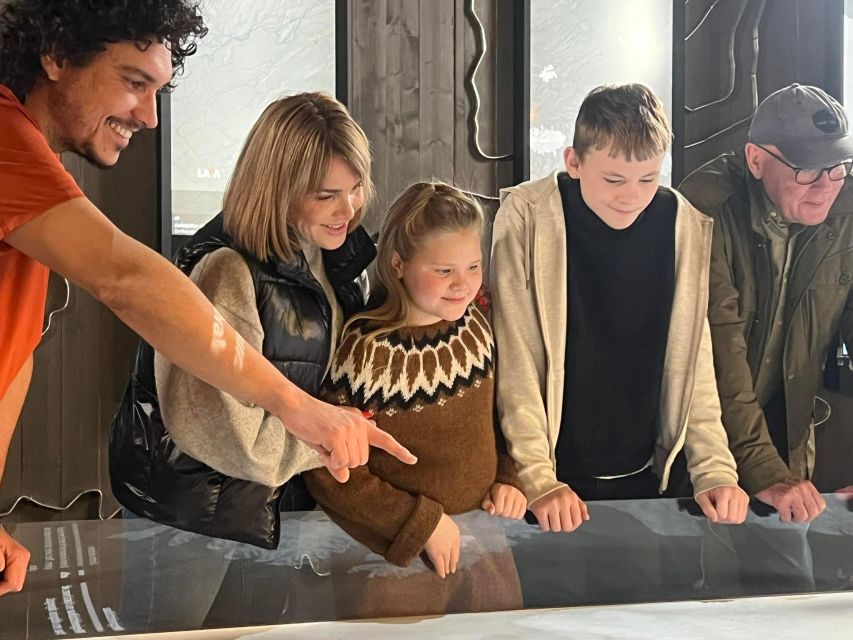
The Fiery Heart of Iceland display focuses on magma rising beneath the country. Iceland sits over a diverging plate boundary, but that is only part of the story. A mantle plume, or hot spot, lies beneath the central highlands and adds another source of heat and volcanic activity.
The display helps explain the difference between magma and lava. Molten rock below the surface is magma. Once it reaches the surface during an eruption, it is called lava. Airborne fragments are known as tephra, and these pieces can range from fine ash to larger particles.
That distinction is useful when you hear eruption reports. News coverage often mentions lava flows, ash, and tephra as if they were interchangeable. They are not. The exhibition shows how gases, water, ice, and the thickness of magma affect what an eruption produces.
You also learn why Iceland has so many different volcanic forms. The country contains 30 volcanic systems, and they do not all behave in the same way. Some produce lava flows, some create explosive eruptions, and others build different types of cones, craters, and layers of volcanic material.
This is one of the strongest parts of the center for anyone who wants more than dramatic eruption footage. The images are striking, but the explanation gives them meaning. You begin to see Iceland as an active geological worksite, not a finished natural museum.
The Magma Learning Center explains what eruptions leave behind
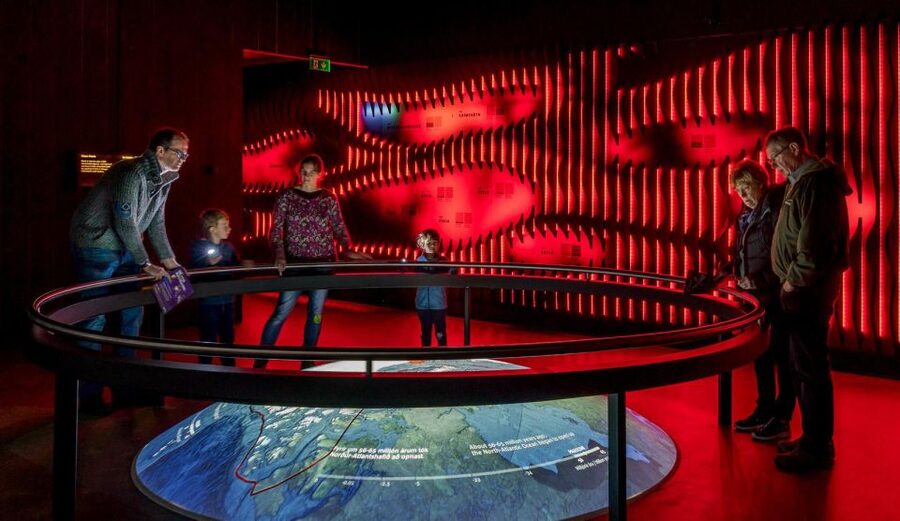
The Magma Learning Center looks at volcanic structures and the materials created when magma moves through the crust. This section is helpful because volcanoes are not only about the moment of eruption. Their effects remain in the ground long after the smoke clears.
Tephra forms when magma meets water or ice, or when the magma is thick and full of gas. It can break into pieces and spread across wide areas. In Iceland, that matters because ice caps, glaciers, lakes, and wet ground can change the behavior of an eruption.
I like the way this section gives you a better vocabulary for the rest of your trip. You may see layers of ash in a cut bank, dark gravel on a road, or strange rock formations along the coast. After a visit here, you have a better chance of recognizing those features as part of a volcanic process rather than simply calling everything lava.
The displays also show that volcanic structures develop in different ways. This is where the visit moves beyond the usual picture of a cone-shaped volcano. Iceland’s volcanic systems include varied forms, and their shape reflects the movement of magma, the surrounding rock, and the presence of water or ice.
The subject can feel technical, so give yourself time with the diagrams. If you rush through this section, the later cinema and outdoor views may be more exciting, but you will miss some of the best explanations in the building.
More Film Location Tours in the world:
- From London: Harry Potter Warner Bros Studio Tour
★ 4.7 · 26,588 reviews - Magical London: Harry Potter Guided Walking Tour
★ 4.7 · 22,044 reviews - London: Warner Bros. Studio Harry Potter Tour & Branded Bus
★ 4.7 · 19,194 reviews - Edinburgh: Harry Potter Magical Guided Walking Tour
★ 4.8 · 11,944 reviews
The cinema brings Grindavík and the Blue Lagoon into focus
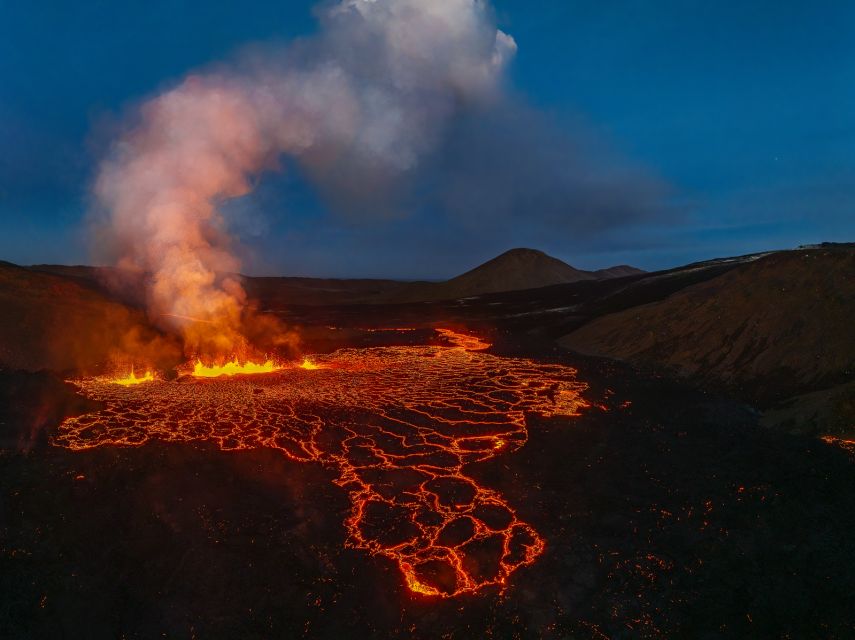
The cinema is one of the emotional high points of the visit. It shows recent eruptions, including activity around Grindavík and the Blue Lagoon. The films let you see the scale and force of events that are difficult to understand from still photographs.
This section gives the exhibition a current edge. Iceland’s volcanic story is not something that ended thousands of years ago. New eruptions continue to change roads, towns, coastlines, and daily life. The footage links the science inside Lava Centre to places you may have heard about or visited.
I would save the cinema for after the main geological sections. Once you understand magma, lava, tephra, and tectonic movement, the eruption films have more impact. You can see the footage as part of a process rather than as a collection of spectacular images.
The film is also useful if your Iceland trip does not take you near an active eruption area. You can witness recent volcanic activity without treating a dangerous site as a tourist attraction. That is a sensible balance: the cinema gives you the drama while keeping you in a controlled setting.
Do not assume this is a long movie attraction that fills most of the day. The full visit can be done in about an hour if you move at a steady pace, but you may want longer if you read the displays and watch everything carefully.
The Local Volcano section puts names to the horizon
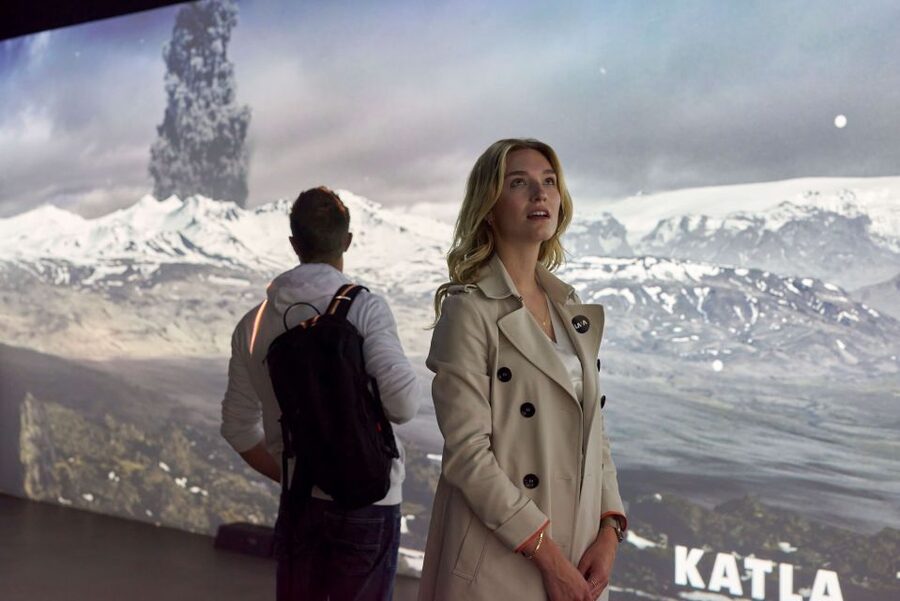
The Local Volcano section and observation deck offer views of four large, active but dormant volcanoes and a group of volcanic islands. The named volcanoes include Eyjafjallajökull, Katla, and Hekla, while the fourth major volcano is part of the wider view. The Westman Islands are also visible as a volcanic island group.
This outdoor moment helps tie the exhibition together. Inside, you learn about volcanic systems in general. Outside, you look at actual peaks and islands shaped by those forces. Two of the volcanoes in view are among Iceland’s most active and productive, though they are dormant at the time described here.
The word dormant is important. You should not expect an eruption during your visit, and visibility depends on weather. Iceland’s cloud, rain, and wind can hide distant peaks. The viewing deck is still worthwhile, but treat it as a bonus rather than the sole reason to pay the admission fee.
Bring your attention to the contrast between the clean lines of the display and the real horizon. A panoramic view can sometimes feel passive. Here, it works better because you have just learned what you are looking at. If the air is clear, you can identify the volcanoes and volcanic islands with much more interest than you would have before entering.
How much time should you allow?
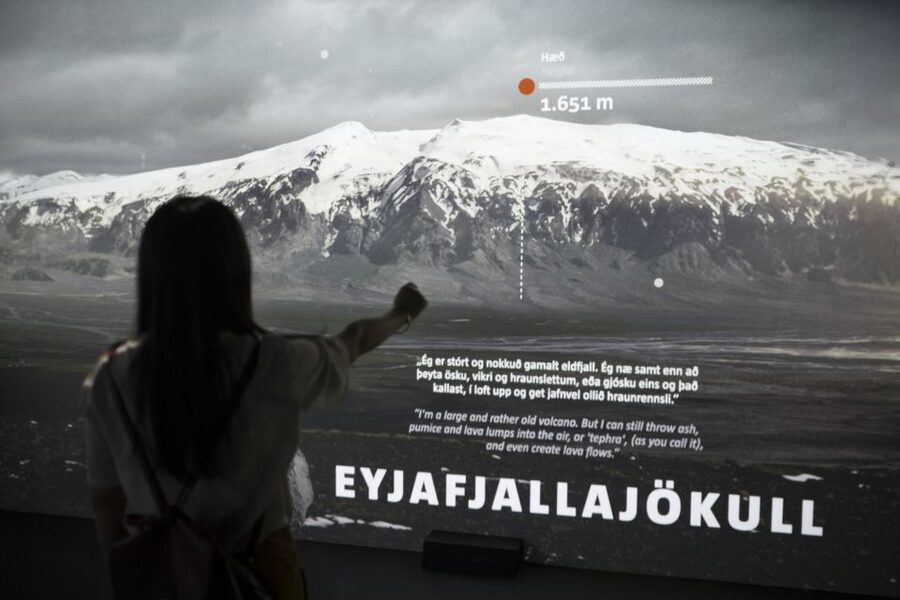
The listed validity is one day, but this is not a guided day-long tour. You visit the exhibition, cinema, and observation deck at the available starting time, then set your own pace inside.
A practical visit can take about an hour. That timing comes from the experience of moving through the interactive stations, watching the eruption film, and stepping outside for the views. If you enjoy reading every panel, discussing the displays, or visiting with children, allow extra time.
The center has English and Icelandic support, and the host or greeter is available in those languages. The activity is wheelchair accessible, which is useful for anyone planning a southern Iceland route with mixed mobility needs. Wheelchairs are included, along with ear muffs, flashlights, and support teddy bears for young children.
Those child-friendly items tell you something about the tone of the visit. This is educational but not stiff. Younger children can take part, although the technical displays may be more useful for older children and adults. The earthquake simulator and moving images will likely hold attention better than the text-heavy sections.
Food and drinks are not included. Plan to eat elsewhere rather than treating the admission as a full attraction package.
Is $42 a fair price?
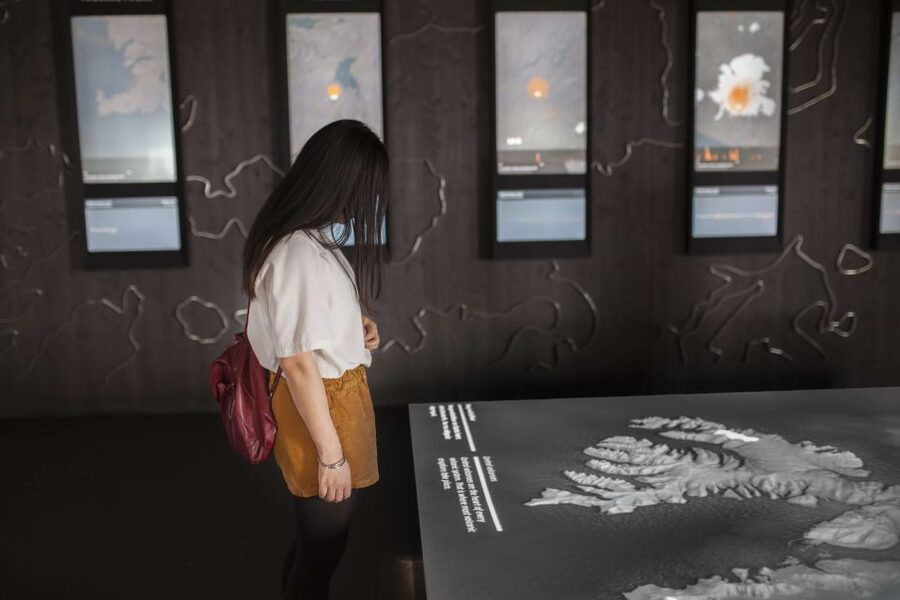
At $42 per person, Lava Centre is not a cheap ten-minute stop. The value depends on how you use it. If you rush through, take a quick look from the deck, and leave after a short film, the price may feel high. If you spend an hour or more with the interactive displays, cinema, earthquake simulator, and outdoor views, the cost becomes easier to justify.
I see the admission as paying for several connected experiences rather than one feature. You get a museum-style exhibition, a current-events film program, a physical earthquake activity, and a volcano viewing point. The combination makes more sense than comparing the ticket with a simple lookout.
The value is also stronger on a poor-weather day. You cannot control fog around Eyjafjallajökull or Katla, but much of the visit remains indoors. The deck may not deliver its full panoramic promise, yet the science displays and cinema still give you a worthwhile stop.
It is less essential for a visitor who already knows Iceland’s geology well and mainly wants outdoor scenery. In that case, you may prefer to spend the money on another activity. For first-time visitors, families, and anyone curious about the forces behind Iceland’s famous sights, the price is more reasonable.
Who will enjoy Lava Centre most?
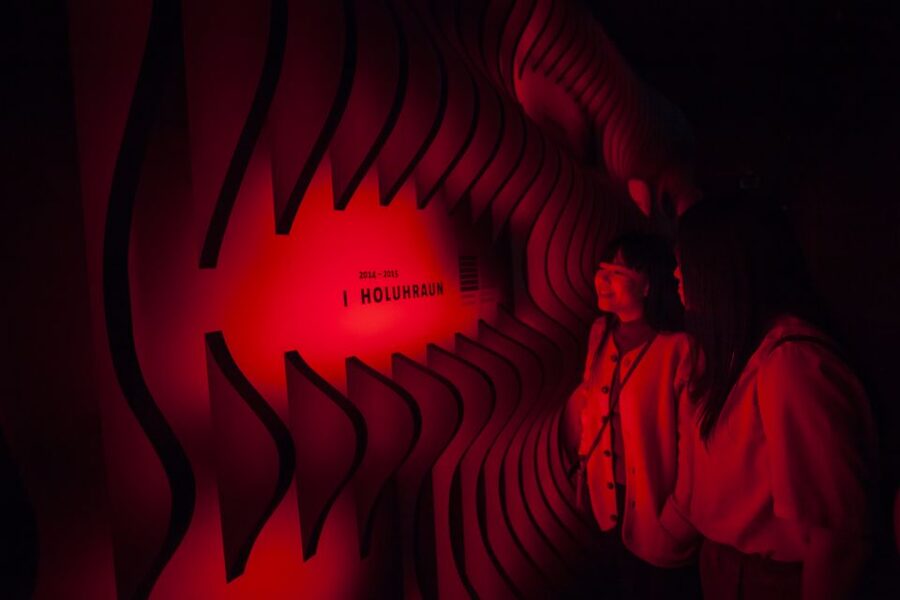
I would recommend this experience to you if you want a clear introduction to Iceland’s geology without signing up for a long excursion. It fits well into a southern Iceland driving day because the visit is compact and the main material is indoors.
Families should find plenty to hold attention, especially in the earthquake area and cinema. The support teddy bears, ear muffs, and flashlights are practical touches for young children, although adults may need to help explain the more technical exhibits.
It is also a good choice for travelers who want context before seeing black-sand beaches, glaciers, geysers, or volcanic mountains. The exhibition helps you notice details you might otherwise pass by.
You may be less impressed if you expect an active lava field, a hike, or a close view of an erupting volcano. This is an interpretation center, not an expedition. Its strength is explanation, safe viewing, and connection between Iceland’s geology and the places around you.
Booking flexibility and practical details
You can cancel up to 24 hours before the activity for a full refund, and you can reserve now while paying later. That flexibility is useful in Iceland, where weather can disrupt a carefully planned driving route.
Check the available starting times before booking because the activity is valid for one day rather than being an open-ended pass. The experience is hosted in English and Icelandic, and wheelchair access is available.
Since food and drinks are not included, think of Lava Centre as one stop within a larger day. The exhibition, cinema, and observation deck are the core of the visit. Plan your meal separately and keep enough time to avoid racing through the displays.
Should you book the Lava Centre experience?
Book it if you want Iceland’s volcanoes explained in plain, visual terms, especially if this is your first visit. The earthquake simulator, recent eruption cinema, and views toward major volcanoes give the center more range than a basic museum.
Skip it if your schedule is already packed with outdoor sights and you have little interest in geology. The $42 ticket needs at least about an hour to feel worthwhile, and the volcano views can be limited by weather.
For most visitors touring southern Iceland, I think it earns its place as a practical, informative stop. You leave with a better sense of why the country looks the way it does, and you may look at every black beach, geyser, and strange mountain with sharper eyes.
FAQ
Where is Lava Centre located?
Lava Centre is in southern Iceland, in the Southern Region of the country.
What does admission include?
Admission includes the Lava Centre exhibition, the cinema, and the observation deck. Ear muffs, flashlights, support teddy bears for young children, and wheelchairs are also included.
How long does the visit take?
The activity is valid for one day, but a visit can take about an hour if you move through the stations, watch the film, and visit the viewing deck. You may spend longer if you read the displays carefully.
Can I see volcanoes from Lava Centre?
Yes. The Local Volcano section and observation deck provide views of four large, active but dormant volcanoes and a group of volcanic islands. The named volcanoes include Eyjafjallajökull, Katla, and Hekla. Visibility depends on conditions.
Is Lava Centre wheelchair accessible?
Yes. The activity is wheelchair accessible, and wheelchairs are included.
What languages are available?
The host or greeter and the activity information are available in English and Icelandic.
Just added in the world
- Hobbiton Movie Set Guided Day Tour with Lunch from Auckland★ 5.0 · 3 reviews
- Private Hobbiton Movie Set & Waitomo Caves in a Day from Auckland★ 5.0 · 2 reviews
- Private Journey to Middle-earth: Hobbiton Movie Set – Ex Auckland★ 5.0 · 7 reviews
- Auckland to Rotorua via Hobbiton Small Group Tour (One Way)★ 5.0 · 72 reviews
- From Auckland:Hobbiton Movie Set & Waitomo Caves Small Group Tour★ 5.0 · 23 reviews
- Auckland to Rotorua, Hobbiton and Waitomo 1 Way Small Group Tour★ 5.0 · 6 reviews
- Auckland to Waitomo Caves and Hobbiton Movie Set Private Tour★ 5.0 · 12 reviews
- Private Hobbiton Movie Set and Rotorua Day Trip from Auckland★ 5.0 · 10 reviews
Museums, compared.

Travelling Galaxy Star Wars Interactive Exhibition
Read our review →
Turin: National Museum of Cinema & Mole Antonelliana Tour
Read our review →

Tokyo Anime Adventure: Studio Tour, Drawing Class & Museum Visit
Read our review →
Ireland: The Quiet Man Museum and Film Location Guided Tour
Read our review →This one also appears on