Review · LOS ANGELES
Historic Hollywood Boulevard and Movie Palaces Walking Tour
Hollywood’s movie history is packed into a short stretch of sidewalk, and this tour helps you read it properly. In 150 minutes, you move from the Hollywood Sign story to the handprints at TCL Chinese Theatre, with the Walk of Fame and old movie palaces filling the route.
I like the tour’s focus on real places rather than movie trivia alone, especially the Egyptian Theatre, Musso & Frank Grill, and Roosevelt Hotel. I also like the small-group format, which gives you room to ask questions. The main drawback is simple: this is a walking tour on busy Hollywood Boulevard, so comfortable shoes and patience with crowds are essential.
Key points to know before you book
- The route covers several major sights: Walk of Fame, Egyptian Theatre, Dolby Theatre, TCL Chinese Theatre, and the Roosevelt Hotel.
- Hollywood’s story reaches beyond film: You’ll hear about musicians, radio figures, fictional characters, restaurants, hotels, and theater design.
- The guides add different strengths: Éloi is noted for humor and strong storytelling, while Mark brings film-industry experience and operational details about cinemas.
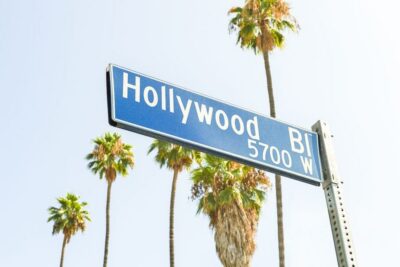
- The tour begins at Hollywood/Highland Metro Station: Meet in front of the elevator at 6815 Hollywood Boulevard, 15 minutes early.
- The price is $35 per person: That is fair if you want context and stories, not just a walk past famous buildings.
- The pace is active but manageable: Expect plenty of walking over 2.5 hours, with several stops for guided commentary and sightseeing.
Why Hollywood Boulevard works best with a guide
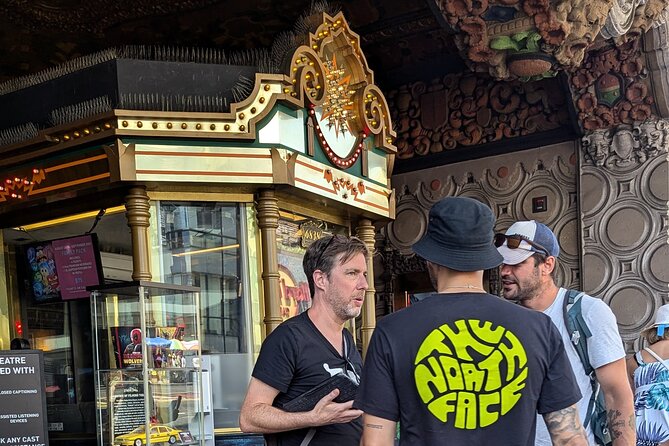
Hollywood Boulevard can feel like a strange mix of movie glamour, souvenir shops, street performers, historic buildings, and ordinary city life. That contrast is part of its character, but it can also make the area hard to read on your own.
A guide gives the boulevard a clear timeline. You learn how a once-quiet street grew into a theater district, how it went through hard times and renewal, and why certain buildings still matter. Instead of seeing only names under your feet, you connect the Walk of Fame to the larger story of entertainment in Los Angeles.
The route also makes sense geographically. It begins at the Hollywood/Highland Metro Station and loops back to 6815 Hollywood Boulevard. You are not spending the tour zigzagging across Los Angeles or waiting for transport between sights.
The group setting matters, too. A small group makes it easier to hear stories and ask questions. A private group is also available if you want a more personal pace or are visiting with family and friends.
More Hollywood and Celebrity Home Tours in Los Angeles
- Full-Day Iconic Sights of LA, Hollywood, Beverly Hills, Beaches and More
★ 5.0 · 6,147 reviews - Warner Bros. Studio Tour Hollywood
★ 4.5 · 5,246 reviews - Hollywood, Beverly Hills & Celebrity Homes Tour by Open Air Bus
★ 5.0 · 2,557 reviews
Starting at Hollywood and Highland
Your meeting point is in front of the elevator at the entrance to the Hollywood/Highland Metro Station. The address is 6815 Hollywood Boulevard, and you should arrive 15 minutes before departure.
This is a practical starting point because it puts you right in the center of Hollywood’s main sightseeing zone. You begin near Ovation, Hollywood, then walk for about 20 minutes before moving into the main sequence of theaters and famous sidewalks.
Give yourself time to find the exact meeting spot. Hollywood Boulevard can be distracting from the moment you arrive, and a late start is not a good way to begin a walking tour. Check the forecast before you leave, wear shoes suited to city walking, and bring a camera if you want photos of the signs, theaters, and cement handprints.
Reading the Hollywood Sign story
The Hollywood Sign is the first major subject, originally built in 1923 as Hollywoodland. Its first purpose was connected to property development, but the sign became much more important than the name suggested.
You’ll hear how the sign changed over time, including the period when it faced possible demolition and the later restoration effort. The story includes support from figures such as Alice Cooper and Hugh Hefner, which gives the landmark a useful human angle.
The sign is not simply a backdrop for a photo. It represents the way Hollywood turns ordinary objects into symbols. A temporary promotional sign became one of the most recognized images in the world.
The experience includes panoramic views of the Hollywood Sign, but this is not a hiking trip to the sign itself. If getting close to the letters is your main goal, you would need a separate activity. Here, the sign works as an opening chapter for the neighborhood’s story.
Walking the Walk of Fame
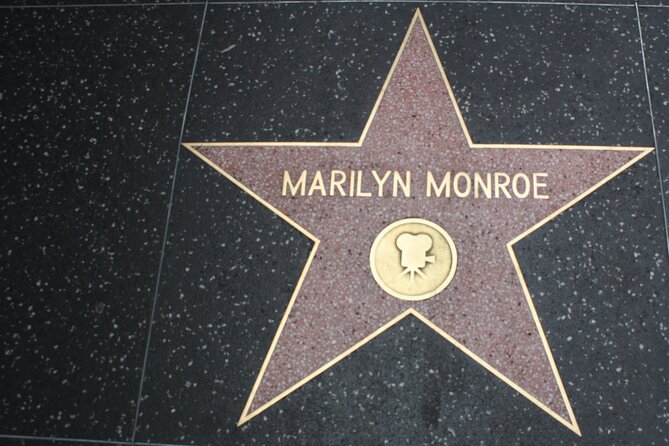
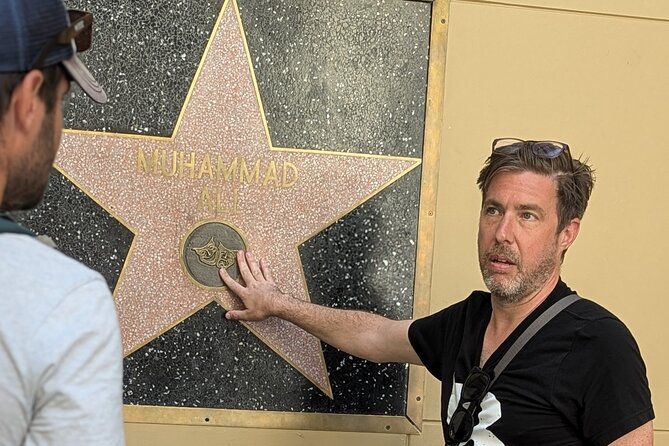
The Hollywood Walk of Fame is often treated as a quick photo stop, but it rewards a slower look. The stars began in 1960, and there are now about 2,700 of them.
Your guide points out that the honors are not limited to movie actors. Musicians, radio personalities, and fictional characters are included, with Mickey Mouse and Godzilla among the better-known examples.
That range tells you something important about Hollywood. The entertainment industry here was never only about films. Television, music, radio, animation, and publicity all helped shape the boulevard and its public image.
The Walk of Fame can be crowded and visually noisy. You may need to pause carefully to find a particular star, and the pavement is not always the calmest place for a long explanation. Still, this is where a guide earns the fee by showing you what to notice instead of leaving you to scan thousands of names at random.
Same place on screen, a different production:
- Full-Day LA Tour: Santa Monica, Hollywood and Beverly Hills
★ 5.0 · 2,431 reviews - Hollywood and Celebrity Homes Bus Tour
★ 4.5 · 2,074 reviews - Hollywood Open Bus Tours
★ 4.5 · 1,801 reviews - Los Angeles: Hollywood & Celebrity Homes Open-Air Bus Tour
★ 4.1 · 1,624 reviews
Egyptian Theatre and the birth of the red carpet
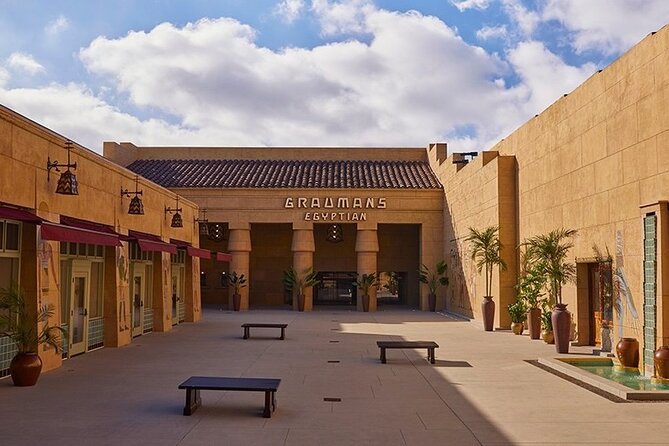
The Grauman’s Egyptian Theatre receives about 20 minutes of sightseeing time. It is one of the route’s most useful stops because the building helps explain how moviegoing became a grand public event.
The theater hosted Hollywood’s first red carpet, tying the building to the modern ritual of premieres and celebrity arrivals. That detail gives the Egyptian more weight than a decorative old cinema. It was part of the system that turned film releases into major social occasions.
You’ll also hear about Hollywood Boulevard’s change from a quiet street into a major theater district. The theater’s design and story offer a break from the star names on the pavement. Here, the focus shifts to architecture, presentation, and the business of attracting an audience.
The stop is primarily sightseeing, so do not expect a full film screening or an extended theater visit. The value is in the explanation and the chance to place the building within Hollywood’s development.
Dolby Theatre and Hollywood’s modern spotlight
The tour includes a 15-minute visit to the Dolby Theatre. This gives you a look at one of the boulevard’s most important modern venues and connects the old movie-palace tradition with today’s entertainment industry.
The Dolby is part of the Hollywood/Highland area, so it fits naturally into the route. It also helps show that Hollywood is not frozen in the golden age. Newer venues continue the business of hosting major events and presenting the film industry to a global audience.
This is a relatively short stop, so think of it as part of the wider story rather than a full behind-the-scenes theater tour. If your main interest is the Oscars, this stop will likely appeal to you. If you want detailed access to backstage spaces, the tour description does not promise that.
TCL Chinese Theatre and the cement handprints
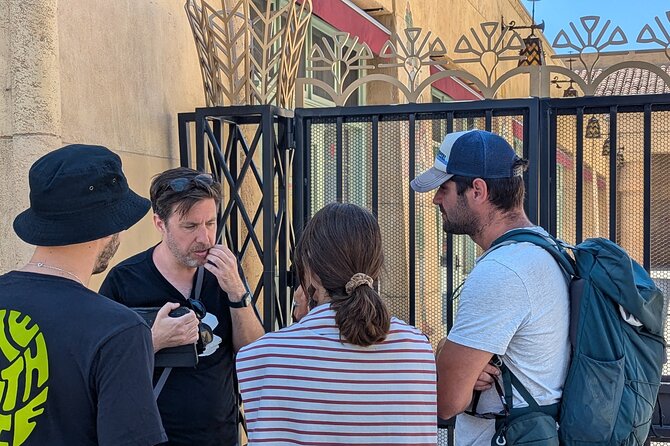
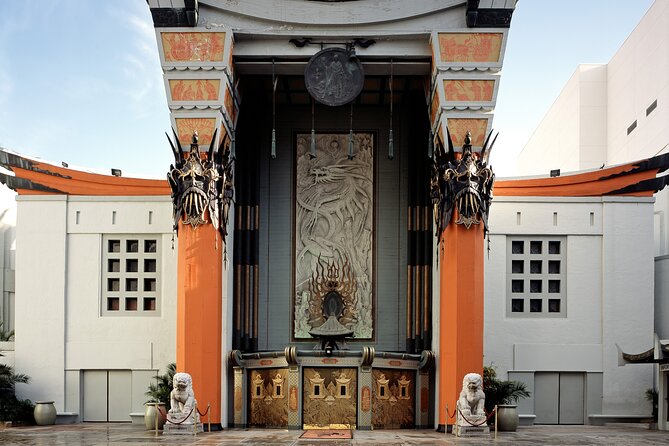
TCL Chinese Theatre is the centerpiece for many people. The theater opened in 1927 and helped create the tradition of celebrities placing their handprints and footprints in cement.
The marks outside make Hollywood’s star system physical. You can compare the shapes, signatures, and dates, then connect them to performers such as Marilyn Monroe and Harrison Ford. The inclusion of R2-D2 adds a playful reminder that fictional characters can become part of Hollywood’s public mythology, too.
The tour allows about 15 minutes for a guided visit. That is enough to understand why the theater matters and to see some of its most famous features, but it is not a long architectural study.
The theater is also a good place to consider the difference between fame and history. Some names remain widely known, while others require a guide’s explanation. That conversation can make the stop more interesting than simply photographing the pavement.
Musso & Frank Grill, where film history meets dinner
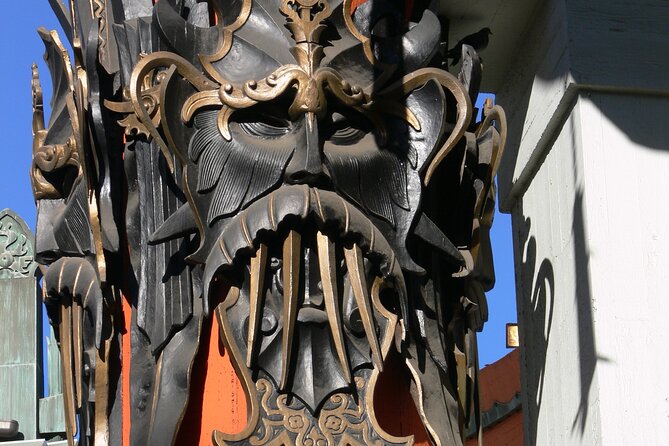
Musso & Frank Grill adds a different flavor to the tour. It is described as Hollywood’s oldest restaurant and has been associated with figures such as Charlie Chaplin, Humphrey Bogart, and Marilyn Monroe.
You do not go there for a meal as part of this experience. Instead, you hear about the restaurant’s role in Hollywood life and its connection to the people who worked, socialized, and negotiated around the film industry.
One especially memorable detail concerns fettuccine Alfredo. Mary Pickford and Douglas Fairbanks helped introduce the dish to the United States after bringing it back from Europe. Stories like this keep the tour from becoming a simple list of actors and release dates. They show how Hollywood culture spread through restaurants, friendships, travel, and daily habits.
For me, Musso & Frank is one of the most valuable stops because it makes the boulevard feel lived-in. Movie history did not happen only inside studios or theaters. It also happened around tables, over meals, and during informal meetings.
The Roosevelt Hotel and Hollywood’s first Academy Awards
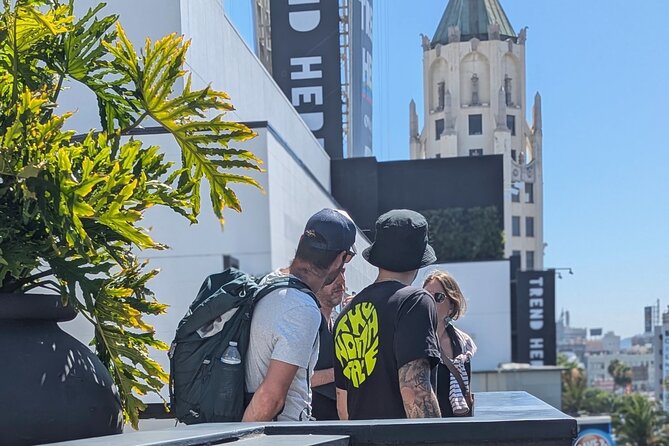
The final major stop is The Hollywood Roosevelt, a Spanish Colonial Revival hotel with a direct link to the Academy Awards. Hollywood’s first Oscars ceremony was held here.
The hotel also connects to Marilyn Monroe, whose association with the building adds another layer of star history. Its interiors are meant to evoke old Hollywood glamour, giving the tour a fitting closing scene.
Ending at the Roosevelt works well because the hotel brings together several themes from the walk: celebrity, architecture, ceremony, and the business of turning entertainment into public spectacle. You finish not just with famous names, but with a sense of how Hollywood presented itself to the world.
The visit lasts about 10 minutes, so the stop is more of a guided look than an extended hotel tour. The exact depth may depend on the guide and the flow of the day, but the setting gives the route a strong finish.
What guides Éloi and Mark bring to the walk
The guide can make or break a history walk, and the available feedback points to two distinct strengths.
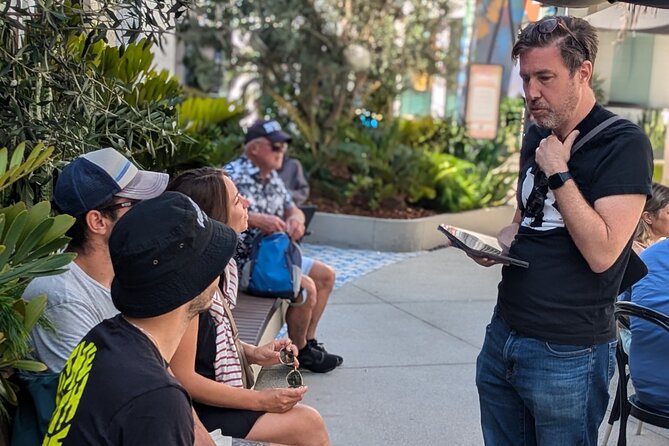
Éloi is described as humorous and well informed, with the ability to keep the tour interesting for adults and teenagers. That matters on a 2.5-hour walk, especially when the group includes people with different levels of interest in film history.
Mark brings a different angle. He works in the film industry and can explain extra details about how cinemas operate, not just who appeared in them. If you want practical context about theaters and the workings behind the screen, that perspective could add a lot.
There has also been an instance where a booking problem placed an English-speaking couple with a French-speaking group. Éloi adapted to the situation and kept both adults and teenagers involved. That suggests some flexibility, though you should confirm your preferred language when booking.
Tours are offered in English and French. Since the guide shapes the experience so strongly, it is worth treating language choice and guide availability as important details rather than small extras.
Is $35 a fair price?
At $35 per person, this tour is priced reasonably for a 150-minute guided walk through central Hollywood. You are paying for a local guide, a planned route, and interpretation at several major sights.
The value is strongest if you want the stories behind the buildings. On your own, you can walk the boulevard for free and see many of the same exteriors. What you may miss is the connection between the sign, theater district, Walk of Fame, restaurant, Chinese Theatre, and Roosevelt Hotel.
The price does not appear to include meals, transportation, or special attraction tickets. You are buying the walking experience and guide service. That makes comfortable shoes and realistic expectations important.
A private group is available, which may be worth considering for a family or group that wants to ask many questions. For solo visitors and couples, the regular small-group format should provide a better balance of price and personal attention.
Who will enjoy this Hollywood walk?
I would recommend it most strongly to first-time visitors, movie fans, history-minded visitors, and anyone who wants an introduction to Hollywood without spending a full day on a studio tour.
It also suits families with older children and teenagers. The Walk of Fame, R2-D2’s cement mark, famous theaters, and celebrity stories offer easy points of interest, while the architecture and restaurant history add substance for adults.
You should think twice if you dislike walking, prefer quiet sites, or want access to working film studios. This tour stays on and around Hollywood Boulevard, where the setting can be crowded and energetic. It is also a guided overview, not a private investigation of every theater interior.
Practical details that affect your day
The full experience lasts 150 minutes and returns to the starting point at 6815 Hollywood Boulevard. That makes it easy to continue sightseeing afterward or return to the Metro station.
Wear comfortable shoes. The route includes several walking sections, including a 20-minute walk to Ovation, Hollywood, followed by more walking between the landmarks. Check the weather and dress for the conditions, since much of the experience takes place outdoors.
Bring a camera, but keep your attention on the guide as well. The best moments are not always the most obvious photo stops. A small detail about a theater, restaurant, or cement signature may be what you remember later.
You can cancel up to 24 hours before the tour for a full refund, and the reserve-now, pay-later option keeps your plans flexible. Starting times vary, so check availability before choosing your day.
Should you book it?
Book this tour if you want Hollywood explained rather than simply photographed. The route covers the essential sights, but its real value comes from the links between them: the sign’s survival, the Walk of Fame’s broad idea of fame, the Egyptian Theatre’s red-carpet role, Musso & Frank’s social history, and the Roosevelt’s place in the Oscars story.
I would choose it early in a Los Angeles visit, so the guide’s context improves the rest of your time on Hollywood Boulevard. At $35, it is a sensible buy for a clear introduction with personal stories and plenty of famous stops.
Skip it if you want a studio backlot, a long theater interior visit, or a quiet walk. For everyone else, this is a practical way to make sense of Hollywood’s most famous street.
FAQ
How long does the Historic Hollywood Boulevard and Movie Palaces Walking Tour last?
The tour lasts 150 minutes, or 2.5 hours.
Where does the tour begin?
It begins in front of the elevator at the entrance to the Metro Station Hollywood/Highland on Hollywood Boulevard, at 6815 Hollywood Boulevard.
Where does the tour end?
The tour returns to 6815 Hollywood Boulevard.
Which sights are included?
The route includes the Hollywood Sign views, Ovation, Hollywood, the Hollywood Walk of Fame, Grauman’s Egyptian Theatre, Dolby Theatre, TCL Chinese Theatre, The Hollywood Roosevelt, and Hollywood Boulevard.
What languages are available?
The tour is available in English and French.
Is a private group available?
Yes. A private group option is available.
What should I bring or wear?
Wear comfortable shoes, check the weather forecast, dress appropriately, and bring a camera. You should arrive 15 minutes before the tour begins.
More Location Walks in Los Angeles
- Hollywood Stars Tour: Walk of Fame, Celebrity Homes, Sunset Strip
★ 4.0 · 341 reviews - Haunted Hollywood Walking Tour: True Crime and Creepy Tales
★ 5.0 · 299 reviews - Los Angeles: Hollywood Sunset Walking & Hiking Tour
★ 5.0 · 230 reviews - LA: Walk of Fame, Hollywood Sign & Beverly Hills Tour
★ 4.9 · 179 reviews
More History Behind the Scenes in Los Angeles
- Los Angeles: Hollywood Hills Spiritual and Cultural Tour
★ 5.0 · 2 reviews - Game of Thrones & History of Dubrovnik Tour
★ 5.0 · 628 reviews - History and Movie Tour of Beaufort by Golf Cart
★ 5.0 · 562 reviews - Dubrovnik: History and Game of Thrones Walking Tour
★ 4.7 · 85 reviews
Just added in Los Angeles
- LA: The Hollywood Guided Film Locations Tour★ 5.0 · 2 reviews
- Sightseeing Hollywood Tours★ 4.2 · 10 reviews
- Los Angeles: Hollywood and Beverly Hills Open-Top Bus Tour★ 4.1 · 53 reviews
- Los Angeles: Universal Studios Hollywood & Bus Tour Package★ 4.1 · 11 reviews
- Los Angeles: Hollywood Hills Spiritual and Cultural Tour★ 5.0 · 2 reviews
- Los Angeles: Hollywood Walk of Fame Walking Tour★ 4.4 · 10 reviews
- Los Angeles: TMZ Star-Studded Celebrities of Hollywood Tour★ 4.2 · 85 reviews
- Los Angeles, Hollywood, & Beverly Hills Afternoon City Tour★ 5.0 · 105 reviews
Hollywood and Celebrity Home Tours in Los Angeles, compared.
Full-Day Iconic Sights of LA, Hollywood, Beverly Hills, Beaches and More
Read our review →
Hollywood, Beverly Hills & Celebrity Homes Tour by Open Air Bus
Read our review →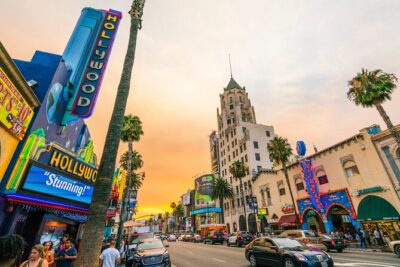
Hollywood & Celebrity Homes Open-Air Bus Tour
Read our review →
Celebrity Homes and Hollywood Open-Air Bus Tour
Read our review →
Universal Studios Hollywood General Admission Ticket, California
Read our review →