
Review · FRANCE
Arromanches 360 Circular Cinema Entry Ticket
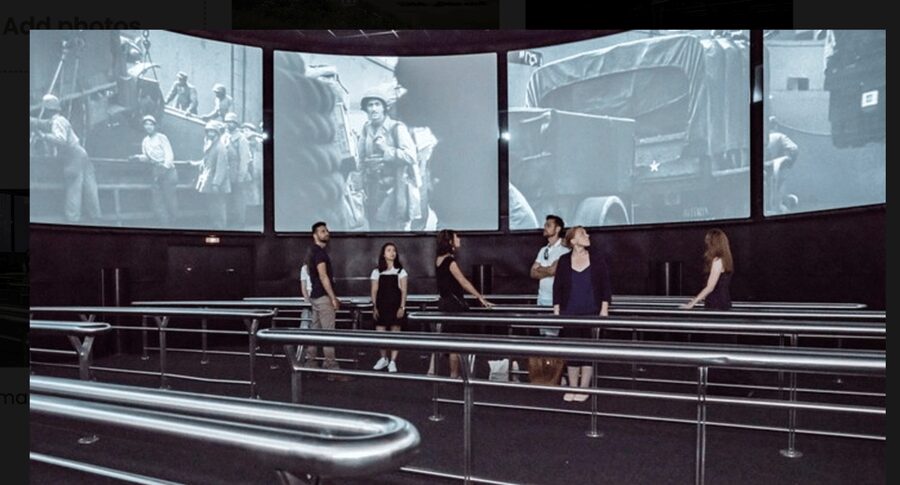
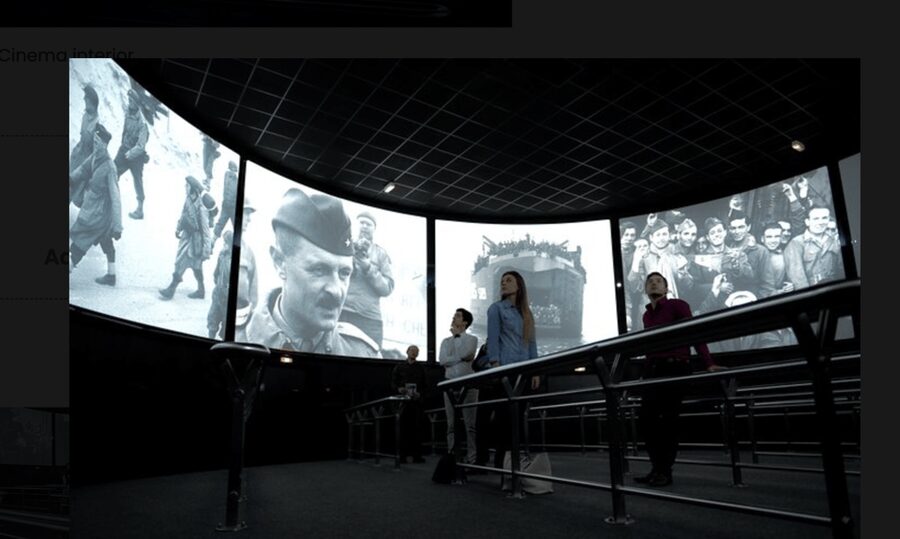
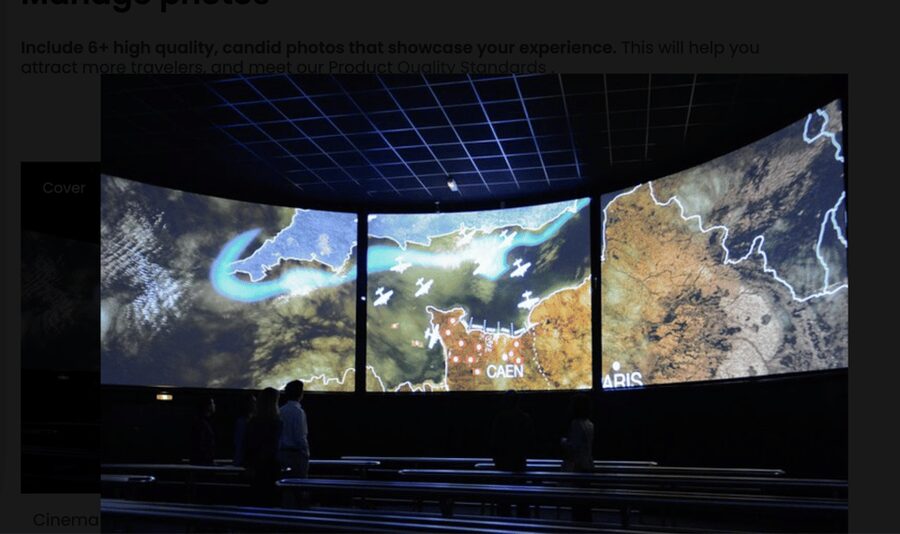
Arromanches 360 turns the D-Day story into a 20-minute film surrounding you on nine screens. From the tense preparations across the Channel to the landings of June 6, 1944, and the 100-day Battle of Normandy, it gives you a fast visual account from several national viewpoints.
I like the mix of archive footage and physical displays, especially the maps, chronology, and artifacts from the Caen Mémorial collection. I also like its setting above Arromanches, where you can connect the film with the remaining pieces of the Mulberry harbor below.
The drawback is its short running time. The presentation aims for emotional force rather than a slow, detailed lesson, and one screening may feel confusing or too brief if you already visited the nearby D-Day museum.
Key points before you go
- Nine-screen presentation: The 20-minute film surrounds you with images rather than showing them on one standard cinema screen.
- Five national archives: Footage comes from British, American, Canadian, French, and German collections.
- A 100-day campaign: The film covers events from June 6 through the Battle of Normandy and the bombing of Le Havre on September 12.
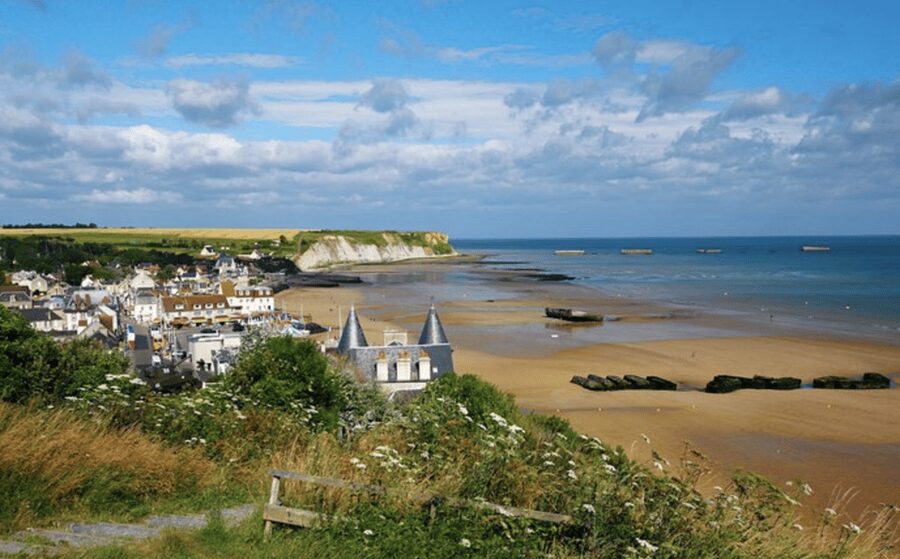
- Clifftop setting: You can look toward the remains of the Mulberry harbor from Arromanches.
- Small pre-film displays: Maps, a campaign chronology, battle results, and artifacts help set the scene.
- Low ticket price: At $8 per person, it works best as a short historical stop added to a day in the Arromanches area.
The story begins above Arromanches
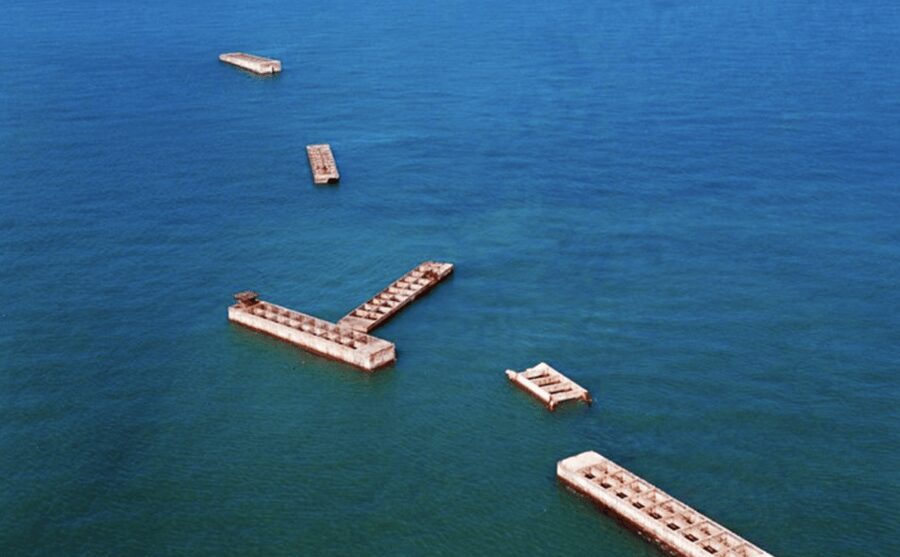
The cinema sits on the Arromanches clifftops, a fitting place for a D-Day presentation. Below, you can see remnants of the Mulberry harbor, the artificial port built to support the Allied invasion. The view gives the film a physical anchor. This is not only a story on a screen. You are standing above one of the places tied to the campaign.
The experience begins in the reception area rather than with the film itself. Use this waiting time well. Maps show the direction and reach of the invasion, while the chronology helps you place the major stages of the Battle of Normandy. Displays also explain the outcome of the campaign, and artifacts from the Caen Mémorial collection provide a direct link to the period.
I find this simple introduction useful because the Normandy campaign can become a blur of place names and dates. A map helps you understand the five landing beaches in the Manche and Calvados departments. The timeline also makes clear that D-Day was only the opening move. The fighting continued for 100 days.
The displays are not a full museum visit, so do not expect a large collection or a long guided lesson. Think of them as preparation for the film. They give you just enough structure to recognize what you are seeing once the screening starts.
More Entry Tickets in the world:
- Hobbiton Movie Set: Guided Tour Ticket
★ 4.9 · 8,167 reviews - Budapest: Cinema Mystica Entry Ticket
★ 4.3 · 3,103 reviews - Universal Studios Hollywood General Admission Ticket, California
★ 4.0 · 1,489 reviews
Nine screens and 20 minutes of wartime footage
The main presentation is a 20-minute film projected across nine screens. Instead of watching one fixed image, you see footage spread around the circular cinema. That format can make troop movements, ships, aircraft, beaches, and battlefield scenes feel larger than they would in an ordinary theater.
The film follows the broad arc of the campaign. It begins with the long preparation on both sides of the Channel, then moves to the morning of June 6, 1944. The weather was unfavorable, but the invasion went ahead. From there, the story continues from the five beaches to the wider Battle of Normandy.
This is a quick presentation, not a full military study. In 20 minutes, the film must move across several months of fighting and a large geographic area. You will receive a strong outline, but not a detailed explanation of every unit, commander, or battle. If you want dates, troop movements, and personal stories in depth, plan to pair this visit with a museum.
The nine-screen format also affects how you watch. Your attention may move from one part of the circular image to another, and some scenes can feel intense or visually busy. That is part of the design, but it may not suit anyone who prefers a calm, linear documentary. The information comes quickly, so the displays beforehand matter.
The short running time is both a strength and a weakness. It makes the cinema easy to fit into a busy Normandy day. You can gain a basic understanding without giving up half a day. At the same time, the film cannot pause for long explanations, and the fast sequence of images may leave you wanting more.
Five national archives give the film a wider view
The footage comes from British, American, Canadian, French, and German archives. That range matters because the Normandy campaign involved different armies, countries, and experiences. You are not seeing the event through only one national collection.
British, American, and Canadian material reflects the Allied preparations and landings. French footage helps connect the military operation with the country being liberated. German archive material adds the view of the forces defending the coast. The result is broader than a simple account of one army moving ashore.
You should still treat the screening as an overview. The supplied information does not identify individual film clips, narrators, or a guide, so do not expect a live presentation led by a named expert. This is a cinema visit with historical displays, not a guided battlefield walk.
The national mix is most useful for first-time visitors. If you are beginning your D-Day visit in Arromanches, the presentation can give you a shared frame of reference before you see other sites. If you have already visited several museums, you may appreciate the archival variety but find less new information.
The film’s emotional side is also part of the appeal. The invasion was a long-awaited moment, but it began in poor weather and led to a campaign lasting far beyond the first day. The presentation aims to give you that sense of scale and urgency, rather than reducing Normandy to a single morning.
Why the Mulberry harbor view matters
Arromanches is closely associated with the Mulberry harbor, and the cinema’s position above the town lets you see its remains from the clifftops. These concrete remnants can look abstract at first. After the film, however, they become easier to understand as part of the huge logistical effort behind the invasion.
The harbor was built to support the movement of men and supplies after the landings. Even without a long technical explanation, seeing the remains from above helps you connect military planning with the coastline in front of you. The harbor was not background scenery. It was part of how the Allied campaign continued after troops reached the beaches.
I recommend taking a moment outside before or after the film. Look toward the water and then return to the maps inside. That small sequence, map, film, then real site, gives the visit more meaning than the screening alone.
The clifftop location also makes comfortable shoes a sensible choice. The activity information specifically recommends them, and you will get more from the stop if you are comfortable moving between the cinema, displays, and outdoor viewpoint. A camera is also listed as a useful item to bring, particularly for the harbor remains and the coastal setting.
More Film Location Tours in the world:
- From London: Harry Potter Warner Bros Studio Tour
★ 4.7 · 26,588 reviews - Magical London: Harry Potter Guided Walking Tour
★ 4.7 · 22,044 reviews - London: Warner Bros. Studio Harry Potter Tour & Branded Bus
★ 4.7 · 19,194 reviews - Edinburgh: Harry Potter Magical Guided Walking Tour
★ 4.8 · 11,944 reviews
Is $8 good value?
At $8 per person, the ticket is inexpensive for a dedicated historical presentation in a major D-Day location. I see the value in it as a compact introduction or a visual companion to a larger Normandy visit. The price is easy to justify if you want a short stop that combines film, maps, artifacts, and a view of the harbor remains.
The value becomes less clear if you expect a full museum experience. The screening lasts only 20 minutes, and the displays are intended to prepare you rather than occupy you for hours. The cinema does not replace the nearby museum of the landing at Arromanches, particularly if you want more objects, context, and detailed interpretation.
One critical response described the presentation as a confusing series of short videos and considered the nearby landing museum a better choice. That is a fair warning. The circular format and rapid editing will not work equally well for everyone, and people who prefer detailed exhibits may find the ticket too limited.
Other experiences have been strongly positive, with high marks for the film, the emotional effect, and the value for money. That split makes sense. The cinema succeeds when you want an intense visual introduction. It is less satisfying when you want a quiet, carefully paced explanation.
For me, the best value comes from combining it with the physical site. Watch the film, study the displays, and look at the harbor remains. Taken together, the visit feels more complete than the 20-minute screening viewed on its own.
Who will get the most from this visit?
I would recommend Arromanches 360 to a first-time Normandy visitor who wants a clear introduction without committing to a long museum visit. Families and mixed-interest groups may also find the short format useful, since it offers history in a concentrated package.
It suits you especially well if you learn through images. The nine screens and archival footage provide a sense of movement and scale that maps alone cannot offer. The five national collections also give the presentation a broader frame than a film built around only one country.
You may want to lower your expectations if you have already spent a great deal of time at D-Day museums. The main benefit then is the format and the setting, not a large amount of new information. The film may repeat familiar events, though the circular projection and archive mix can still add a different feel.
The experience may not suit people with back problems or heart problems, according to the supplied restrictions. It is also listed as unsuitable for people prone to seasickness, which is worth noting given the surrounding-screen format. Although the activity is described as wheelchair accessible in one section, the important information also says it is not suitable for wheelchair users. Because those statements conflict, confirm access conditions before booking if this affects your plans.
Timing, flexibility, and practical planning
The ticket is valid for one day, with starting times dependent on availability. You should check the available time before building the rest of your Normandy schedule around it. The film itself is short, but the reception displays and outdoor view deserve extra time if you want to use the visit properly.
There is no guide name or live guide service provided in the activity information. You will instead use the maps, chronology, artifacts, and film to follow the story. If you need detailed answers during the visit, consider pairing the cinema with a museum or another history-focused stop.
The booking terms are friendly for a changeable itinerary. You can cancel up to 24 hours before the activity for a full refund, and you can reserve now while paying later. Those terms are useful in Normandy, where weather and driving plans can change quickly.
Bring comfortable shoes and a camera. The shoes help with the clifftop setting and movement around the site. The camera is useful for the view toward the harbor remains, though the most important part of the visit is the film and the historical displays.
My recommendation: book it as a short D-Day primer
I would book Arromanches 360 if you want a brief, visually forceful introduction to the D-Day landings and the Battle of Normandy. At $8, it is a reasonable addition to a day in Arromanches, especially when you also take time to view the Mulberry harbor remains.
I would not choose it as your only Normandy history stop. The 20-minute film covers a huge subject, and the circular presentation can feel rushed or confusing if you want a detailed account. Pair it with the nearby landing museum for a fuller visit.
The best plan is simple: arrive with time to study the maps and artifacts, watch the film, then step outside and look toward the harbor. If that sounds like the kind of short, focused history stop you want, this ticket earns its place in your itinerary. If you already know the campaign well and prefer detailed exhibits, spend your time at the museum instead.
FAQ
How long does the Arromanches 360 film last?
The film lasts 20 minutes. The reception area also has maps, a chronology, information about the outcome of the Battle of Normandy, and artifacts to view.
How many screens show the film?
The film is projected across nine screens in the circular cinema.
What historical period does the film cover?
It covers the D-Day landings and the Battle of Normandy, beginning with the preparations before June 6, 1944, and continuing through the 100-day campaign.
Which archives are used in the film?
The footage comes from British, American, Canadian, French, and German archives.
Can I see the Mulberry harbor from the cinema?
Yes. The cinema is located on the Arromanches clifftops, where you can see remnants of the Mulberry harbor.
How much does admission cost?
The listed price is $8 per person.
Is the ticket valid for more than one day?
The ticket is valid for one day. You should check availability for the available starting times.
Can I cancel my booking?
You can cancel up to 24 hours in advance for a full refund.
Is the cinema wheelchair accessible?
The activity information lists it as wheelchair accessible, but it also says the experience is not suitable for wheelchair users. If access is important for you, confirm the current conditions before booking.
Just added in the world
- Hobbiton Movie Set Guided Day Tour with Lunch from Auckland★ 5.0 · 3 reviews
- Private Hobbiton Movie Set & Waitomo Caves in a Day from Auckland★ 5.0 · 2 reviews
- Private Journey to Middle-earth: Hobbiton Movie Set – Ex Auckland★ 5.0 · 7 reviews
- Auckland to Rotorua via Hobbiton Small Group Tour (One Way)★ 5.0 · 72 reviews
- From Auckland:Hobbiton Movie Set & Waitomo Caves Small Group Tour★ 5.0 · 23 reviews
- Auckland to Rotorua, Hobbiton and Waitomo 1 Way Small Group Tour★ 5.0 · 6 reviews
- Auckland to Waitomo Caves and Hobbiton Movie Set Private Tour★ 5.0 · 12 reviews
- Private Hobbiton Movie Set and Rotorua Day Trip from Auckland★ 5.0 · 10 reviews
France Film Location Tours, compared.

Behind the Scenes of the Grand Rex: 50-Minute Studio Tour
Read our review →



a movie tour in Montmartre inspired by Amélie Poulain
Read our review →
This one also appears on