Review · LOS ANGELES
Oscar History and Film Set Studio Tour at the Biltmore Hotel
The clever idea here is simple: you stand in a real Biltmore room while smartglasses show the past in that exact space. Watch Oscar ceremonies, old Los Angeles, Prohibition-era scenes, and movie clips appear as you move through the hotel. Guides Eloi and Mark lead the hour-long visit, adding stories and helping you follow the technology.
I like the direct link between place and picture, especially in the room used for the first Academy Awards and the spaces seen in Ghostbusters, Chinatown, Fight Club, and Oppenheimer. I also like the small group limit of 10 people, which should make it easier to see the glasses and ask questions. The main trade-off is time: one hour gives you a lively introduction, not a slow architectural inspection of every corner.
Key points to know before you book
- Smartglasses put film clips inside the real locations, rather than showing movie trivia in a separate museum.
- The Historic Corridor connects the hotel to the first Academy Awards, one of the tour’s most important stops.
- The Crystal Ballroom links Hollywood glamour with major political history, including the 1960 Democratic National Convention.
- The Gold Room reveals a Prohibition-era side of the Biltmore, beyond its polished public rooms.
- The tour is limited to 10 people and costs $25, a reasonable price for a technology-based history walk.
- You return to the hotel’s meeting point after about one hour, with free cancellation available up to 24 hours before the start.
Why the Biltmore makes such a good film tour
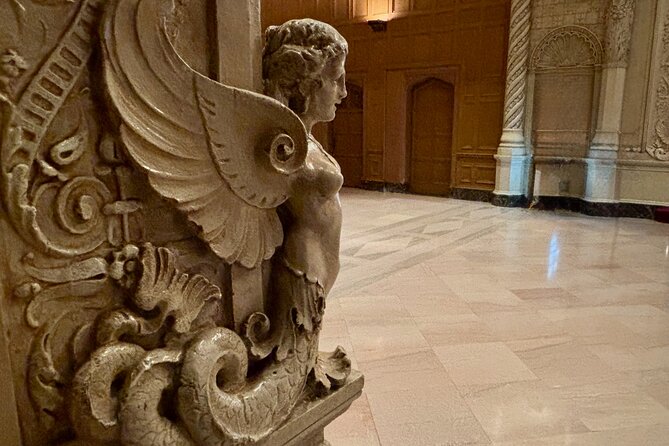
The Millennium Biltmore is not simply a pretty old hotel. Its grand interiors have served as settings for Hollywood movies, music videos, ceremonies, and major public events. That gives this tour more substance than a standard walk through an ornate building.
The smartglasses change how you read the rooms. A corridor can look like a corridor until you see the same space in an old photograph or a film scene. Then the details begin to matter: the ceiling, the doorway, the ballroom floor, and the angle from which a camera captured the room.
You also get two kinds of time travel. One layer reaches back to the hotel’s early decades, including the 1920s, the silent-film era, and Prohibition. The other reaches into modern pop culture, with clips connected to Ghostbusters, Beverly Hills Cop, Taylor Swift, and Jisoo.
That mix should appeal to you if you enjoy both architecture and screen history. You do not need to be an expert on either. The guide supplies the context, while the visual material shows why the location mattered.
More Film Studio Tours in Los Angeles
- Warner Bros. Studio Tour Hollywood
★ 4.5 · 5,246 reviews - Universal Studios Hollywood General Admission Ticket, California
★ 4.0 · 1,489 reviews - Skip the Line: Express Ticket at Universal Studios Hollywood
★ 4.5 · 1,144 reviews
Starting at 507 South Olive Street
The meeting point is the Millennium Biltmore Historic Hotel at 507 South Olive Street in downtown Los Angeles. The tour begins and ends at the hotel, making it easy to fit into a day of sightseeing in the city center.
The Biltmore is near public transportation, which matters in downtown Los Angeles, where driving and parking can eat into a short visit. Your confirmation arrives when you book, and the activity is offered in English.
The group size is capped at 10 people. That is a useful detail for a tour involving wearable technology. You are less likely to lose sight of the guide, and the presentation should feel more personal than a large hotel group.
Expect about one hour on foot inside the hotel. The schedule is compact, so arrive ready to keep moving from one room to the next. You will not be spending a long time at one exhibit or sitting through a formal presentation.
The Music Room and its cherub-filled ceiling
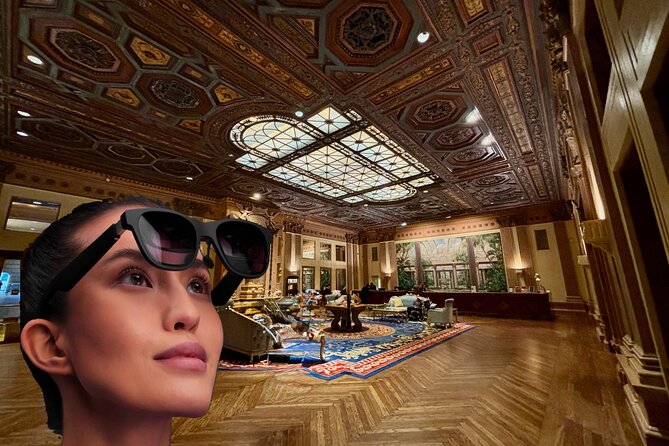
The first major stop is the Music Room, where the Italian Renaissance influence is easy to see. Look up at the intricate ceiling, filled with cherubs and decorative detail. The room gives you an immediate sense of the Biltmore’s formal style before the tour shifts toward film and event history.
This is a good place for the smartglasses to do more than replay a clip. Historical photographs can show how the room looked in an earlier period, while the guide explains how the hotel fit into the growth of Los Angeles.
You should take a moment to look at the actual architecture before focusing on the digital overlay. The whole point of the experience is the relationship between the real room and the material placed over it. If you stare only at the glasses, you may miss the details around you.
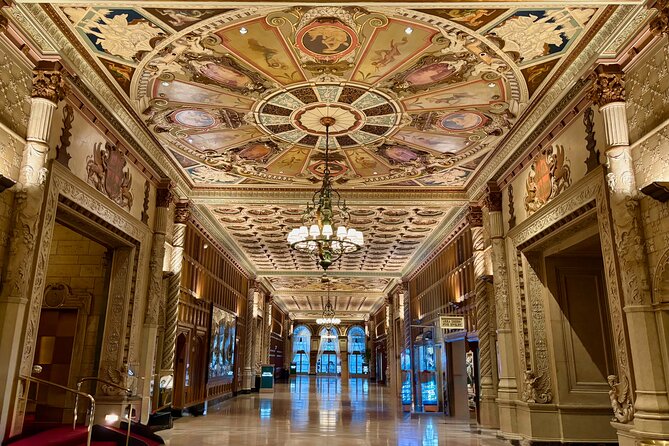
The Galleria and Giovanni Smeraldi’s decoration
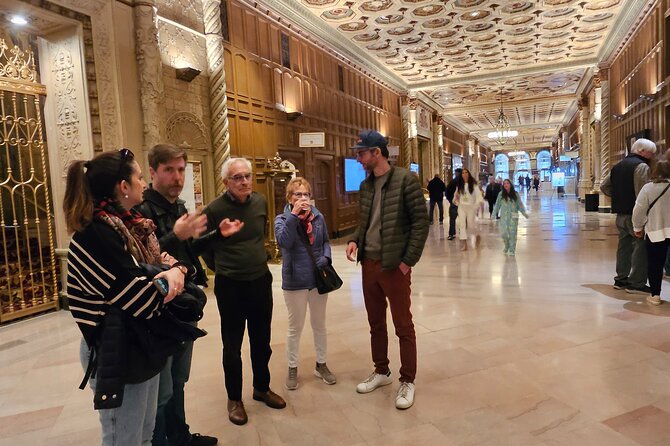
The tour continues through the Galleria, a corridor decorated by Giovanni Smeraldi. Its painted surfaces and ornate design make it one of the hotel’s more theatrical passages.
This is where the experience can feel especially effective for anyone who likes visual comparisons. You see the Galleria as it exists now, then receive images or footage that connect the same setting to another period. The building becomes easier to read because the guide gives you a before-and-after view rather than asking you to imagine the past from a bare description.
The Galleria also helps break up the tour. You are not only standing in ballrooms and listening to dates. You are walking through the hotel’s connected spaces, with the guide directing your attention to decorative features and screen appearances along the way.
More Film Studio Tours in the USA
- The VIP Experience at Universal Studios Hollywood in California
★ 4.5 · 551 reviews - Warner Bros. Studio Tour & Celebrity Homes Tour Package
★ 3.5 · 225 reviews - Universal Studios Hollywood: VIP Tour with Ticket
★ 4.6 · 170 reviews - Los Angeles: Warner Bros Studio Hollywood & Bus Tour Package
★ 3.6 · 150 reviews
The Historic Corridor and the first Academy Awards
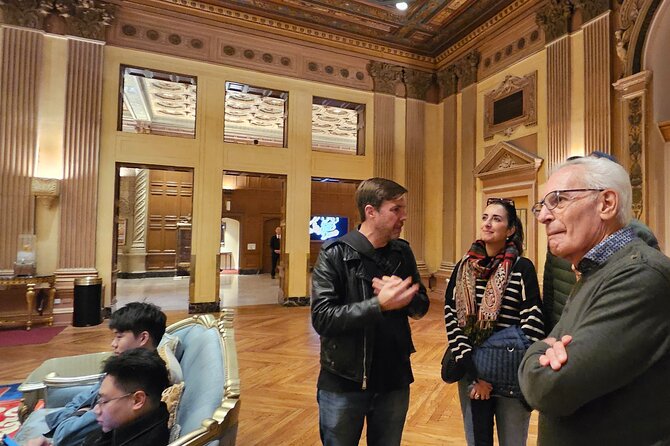
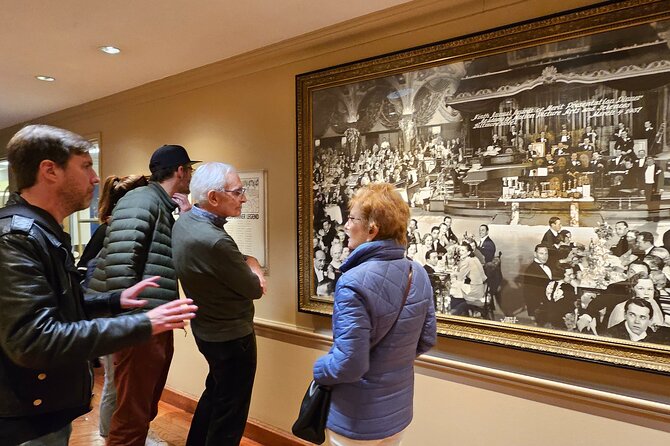
The Historic Corridor is the key stop for Oscar fans. The first Academy Awards were held here, and the hotel is closely tied to the creation of the Oscars.
That connection gives the tour its strongest Hollywood-history moment. The ceremony is often remembered as a grand event in a famous theater, but here the setting is a hotel corridor in downtown Los Angeles. Through the glasses, the past can be placed back into the room where it happened.
You may also see archival material connected to the hotel’s role in the silent-film era. This adds useful context. The Biltmore was not merely chosen as a movie backdrop long after its construction. It was part of the city’s entertainment culture from an early stage.
If you are mainly interested in the Oscars, this stop may be the reason to book. If you want a detailed study of Academy Award winners, however, the tour is not presented as a long awards-history lecture. Its focus is the place, the images, and the way Hollywood used the building.
The VIP Olive Street Entrance and Chinatown
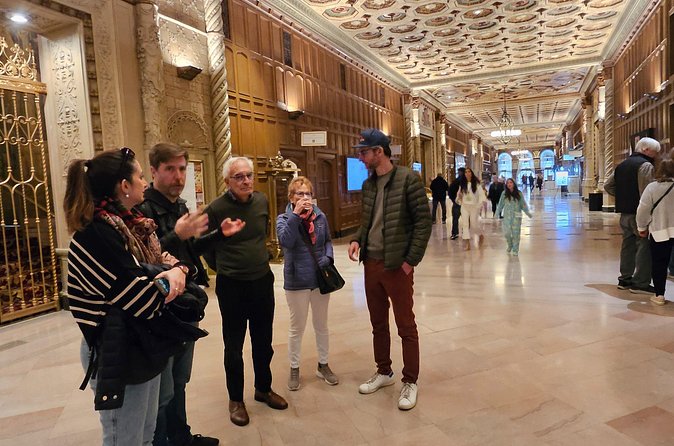
The VIP Olive Street Entrance has a screen connection of its own. It was featured in Chinatown, giving you a chance to compare a recognizable movie setting with the entrance in front of you.
This kind of stop works best when you already know the film. The smartglasses can show the scene at the location itself, helping you notice how filmmakers framed the doorway and used the hotel’s appearance.
Even if you have not seen Chinatown, the stop still adds variety to the tour. You move from early Academy Award history to a later film’s use of the building. The Biltmore becomes a location across different eras, not a site associated with only one production.
The Crystal Ballroom, from Hollywood galas to JFK
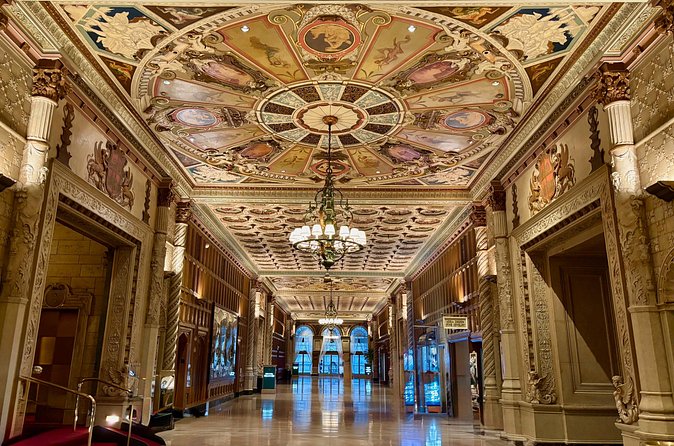
The Crystal Ballroom is one of the tour’s grandest spaces. Its glittering appearance fits the hotel’s connection to Hollywood galas, but the room also carries political history.
Here you may see footage from the 1960 Democratic National Convention, including the nomination of John F. Kennedy. That pairing is one of the most interesting details of the experience. A ballroom associated with glamour also hosted a major moment in American political life.
The digital footage matters because political history can feel abstract when you read about it in a book. Seeing the event connected to the actual room gives you a clearer sense of scale and setting. You are not simply told that something happened at the Biltmore. You are shown where it happened.
The Crystal Ballroom is also likely to be one of the better photo stops, though the tour’s main purpose is not a photography session. Your attention will be divided between the room, the guide, and the smartglasses.
The Gold Room and Prohibition-era secrets
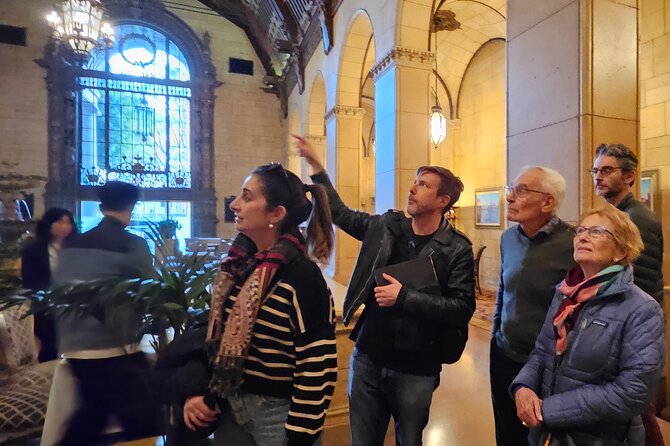
The Gold Room shifts the mood. It carries a Prohibition-era story, with the hotel’s polished image giving way to a less formal side of its past.
This is the sort of detail that makes an architecture tour more memorable. Grand hotels are often presented through their public rooms, but their history also includes private gatherings and hidden activity. The Gold Room gives the tour a touch of mystery without turning the whole visit into a theatrical performance.
The smartglasses can show historical images and footage while you remain in the room. That combination helps you understand how the space was used, rather than treating Prohibition as a distant national story with no connection to Los Angeles.
The Rendezvous Court and Moorish design
The final major stop is the Rendezvous Court, a Moorish-inspired room that provides a strong visual finish. Its design differs from the Italian Renaissance influence seen earlier, so the tour ends with another change in style.
This is a good closing space because it brings the focus back to the hotel itself. After seeing film clips and historical footage, you can appreciate the building as architecture rather than only as a movie set.
The tour’s overall route works because each stop adds a different reason to care about the Biltmore:
- The Music Room shows decorative craftsmanship.
- The Galleria highlights painted architectural detail.
- The Historic Corridor links the hotel to the first Oscars.
- The Olive Street Entrance connects it to Chinatown.
- The Crystal Ballroom joins Hollywood spectacle with JFK’s nomination.
- The Gold Room brings in Prohibition.
- The Rendezvous Court closes with Moorish-inspired design.
How the smartglasses work in practice
The technology is the tour’s main selling point, and it is also the part you should consider most carefully. You receive smartglasses and use a phone as part of the experience. The guide sends photos, historical footage, and film clips to the glasses during the walk.
The effect is not just a video playing in front of you. The point is that the material relates to the room where you are standing. You might see an old view of the hotel, an Oscars scene, or a film moment while looking at the real doorway or ballroom.
Guides Eloi and Mark are central to making this work. They accompany you through the hotel, explain the locations, and help you follow the visual material. The tour is not designed as a self-guided gadget rental.
You should expect the glasses to add a new layer, not replace the building. Keep looking around you. The best moments come when the modern room, the archival image, and the movie clip line up in your mind.
Is $25 a fair price?
At $25 per person, the tour is priced below many longer Los Angeles excursions. The visit lasts about one hour, so the raw time is not the bargain. The value comes from the combination of a historic hotel, a guide, and custom visual material tied to the rooms.
I would consider it good value if you enjoy film locations, Los Angeles history, or new museum-style technology. It is also a sensible add-on to a downtown day because the tour begins and ends at the Biltmore.
The price is less compelling if you want a long architectural tour or extensive time for independent exploration. You are paying for a focused presentation with a set route, not unrestricted access to every part of the hotel.
Group discounts are available, which may help if you are booking with family or friends. The tour is offered in English, and the maximum group size is 10.
Who should book this experience?
I would put this tour high on your list if you like:
- Movie and television locations
- The Academy Awards and Hollywood history
- Historic hotels and decorative interiors
- Augmented reality or wearable technology
- Short tours that fit into a larger Los Angeles itinerary
- Seeing famous events in the rooms where they happened
It is also suitable for a wide age range. The experience has visual material for younger visitors, while the Oscar, Prohibition, political, and architectural stories give adults plenty to follow.
You may want to skip it if you dislike wearing glasses during a tour, prefer quiet self-guided sightseeing, or want a long, technical explanation of the Biltmore’s architecture. The one-hour format keeps things moving, but it limits how much detail the guide can cover.
Free cancellation is available if you cancel at least 24 hours before the start time. Changes made within 24 hours are not accepted, and the paid amount is not refunded for a late cancellation.
Should you book the Biltmore film and Oscar tour?
Book it if you want to see the Biltmore as both a building and a working piece of Hollywood history. The smartglasses give the tour its special edge, while the guide keeps the experience grounded in real rooms, real events, and recognizable films.
I especially like the combination of the first Oscars, the Crystal Ballroom footage of JFK’s nomination, and movie scenes from Ghostbusters, Chinatown, Fight Club, and Oppenheimer. At $25, that is a fair price for a compact downtown experience.
Just keep your expectations in line with the format. This is a fast, technology-led introduction, not a two-hour architectural lecture. If that sounds right for you, the Biltmore offers an entertaining way to see Los Angeles history appear where it happened.
FAQ
Where does the tour begin?
The tour begins at the Millennium Biltmore Historic Hotel, 507 South Olive Street, Los Angeles, California 90013.
Where does the tour end?
The activity ends back at the meeting point inside the Biltmore.
How long does the tour last?
The walking tour lasts approximately one hour.
How much does the tour cost?
The listed price is $25 per person. Group discounts are available.
Is the tour offered in English?
Yes. The tour is offered in English.
How many people can join the tour?
The maximum group size is 10 people.
Does the tour use augmented reality glasses?
Yes. You use smartglasses and a phone to view historical photos, footage, and film clips during the visit.
Can I cancel for a full refund?
Yes, if you cancel at least 24 hours before the experience start time. Cancellations made less than 24 hours before the start time are not refunded.
More History Behind the Scenes in Los Angeles
- Historic Hollywood Boulevard and Movie Palaces Walking Tour
★ 5.0 · 9 reviews - Hollywood History Tour
★ 5.0 · 8 reviews - Historic Hollywood Boulevard and Movie Palaces Walking Tour
★ 4.8 · 4 reviews - Los Angeles: Hollywood Hills Spiritual and Cultural Tour
★ 5.0 · 2 reviews
Just added in Los Angeles
- Universal Studios Hollywood: Halloween Horror Nights★ 4.2 · 98 reviews
- West Hollywood Food Tour★ 4.5 · 54 reviews
- Hollywood and Beverly Hills Bus Tour★ 5.0 · 2 reviews
- LA Walk of Fame 100 Years of Hollywood Tour By Junket★ 5.0 · 3 reviews
- Warner Bros. Studio Tour & Hop-on Hop-off Bus Tour Package★ 3.5 · 55 reviews
- Total Hollywood Experience with Walk of Fame and Celebrity Homes Tour★ 4.0 · 3 reviews
- The Ultimate Hollywood Tour★ 5.0 · 8 reviews
- Universal Studios Hollywood & Celebrity Homes Tour Package★ 3.5 · 46 reviews
Film Studio Tours in Los Angeles, compared.

Universal Studios Hollywood General Admission Ticket, California
Read our review →
Skip the Line: Express Ticket at Universal Studios Hollywood
Read our review →
The VIP Experience at Universal Studios Hollywood in California
Read our review →
Warner Bros. Studio Tour & Celebrity Homes Tour Package
Read our review →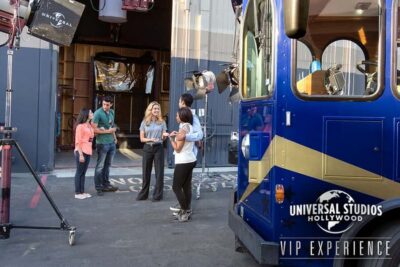
Universal Studios Hollywood: VIP Tour with Ticket
Read our review →
Warner Bros Studio Hollywood & Bus Tour Package
Read our review →
Universal Studios Hollywood: Halloween Horror Nights
Read our review →